Last updated November 21, 2026
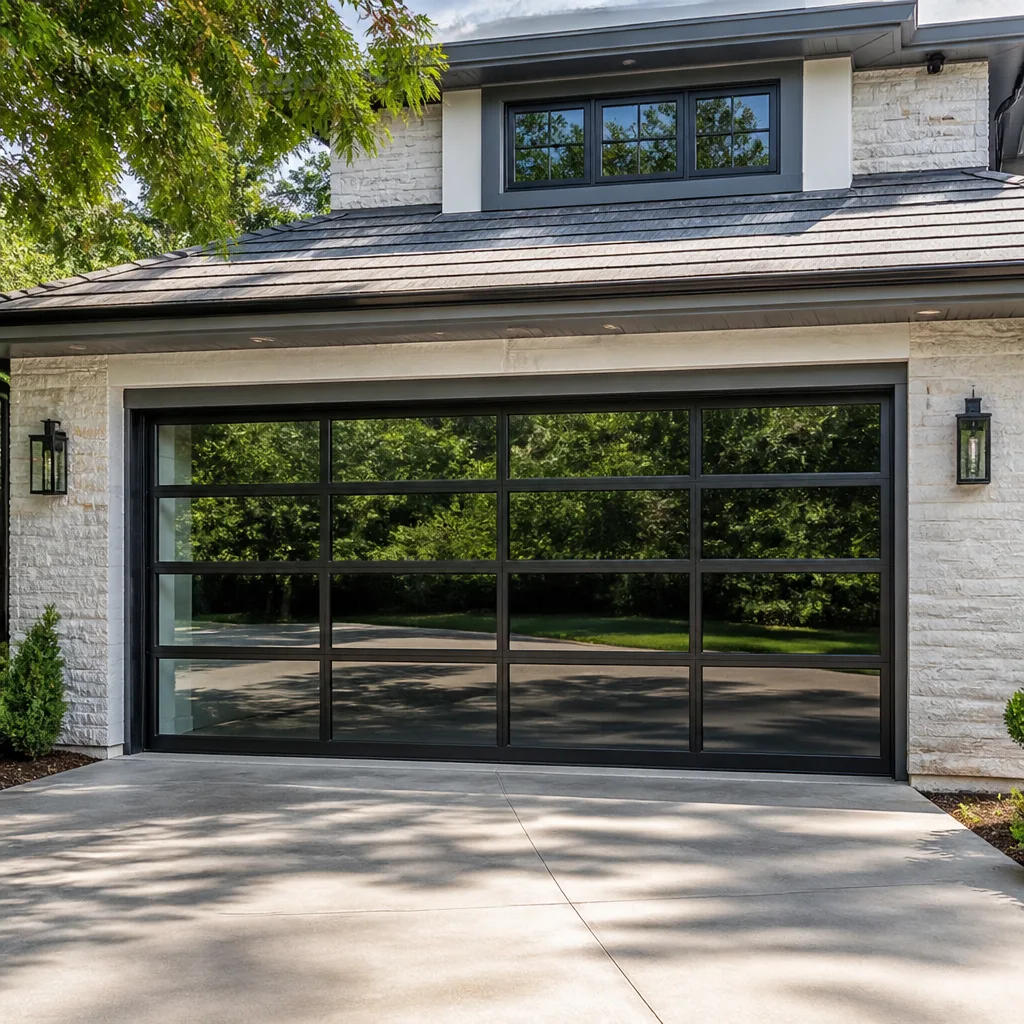 Full-view glass
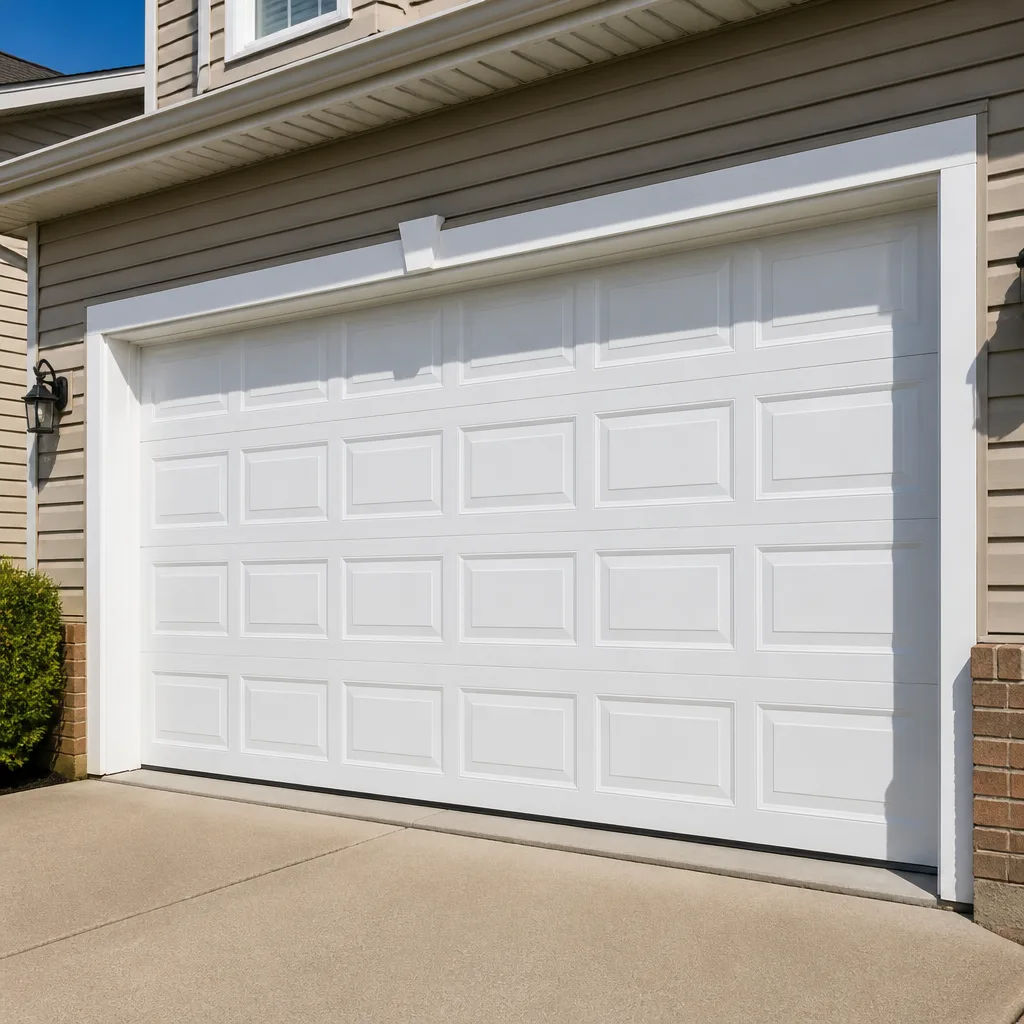 Raised-panel steel
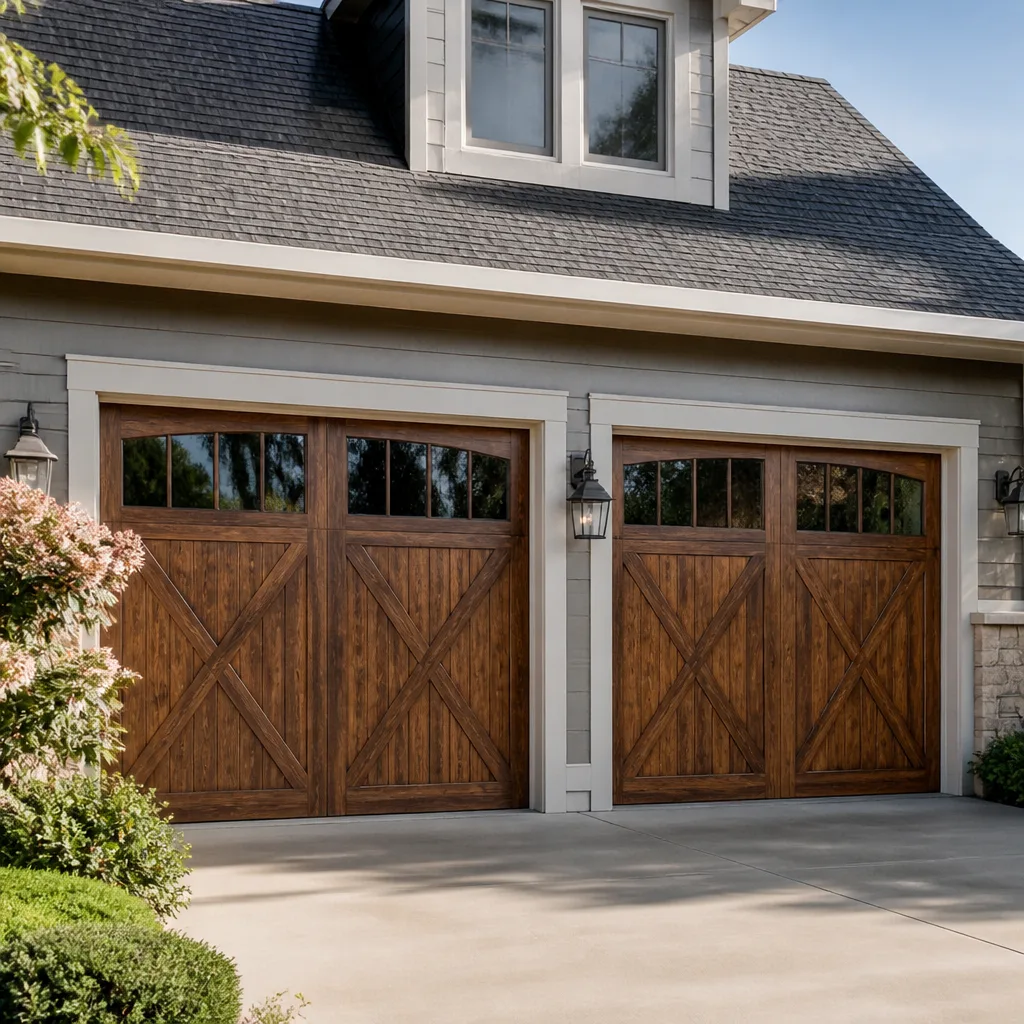 Carriage house
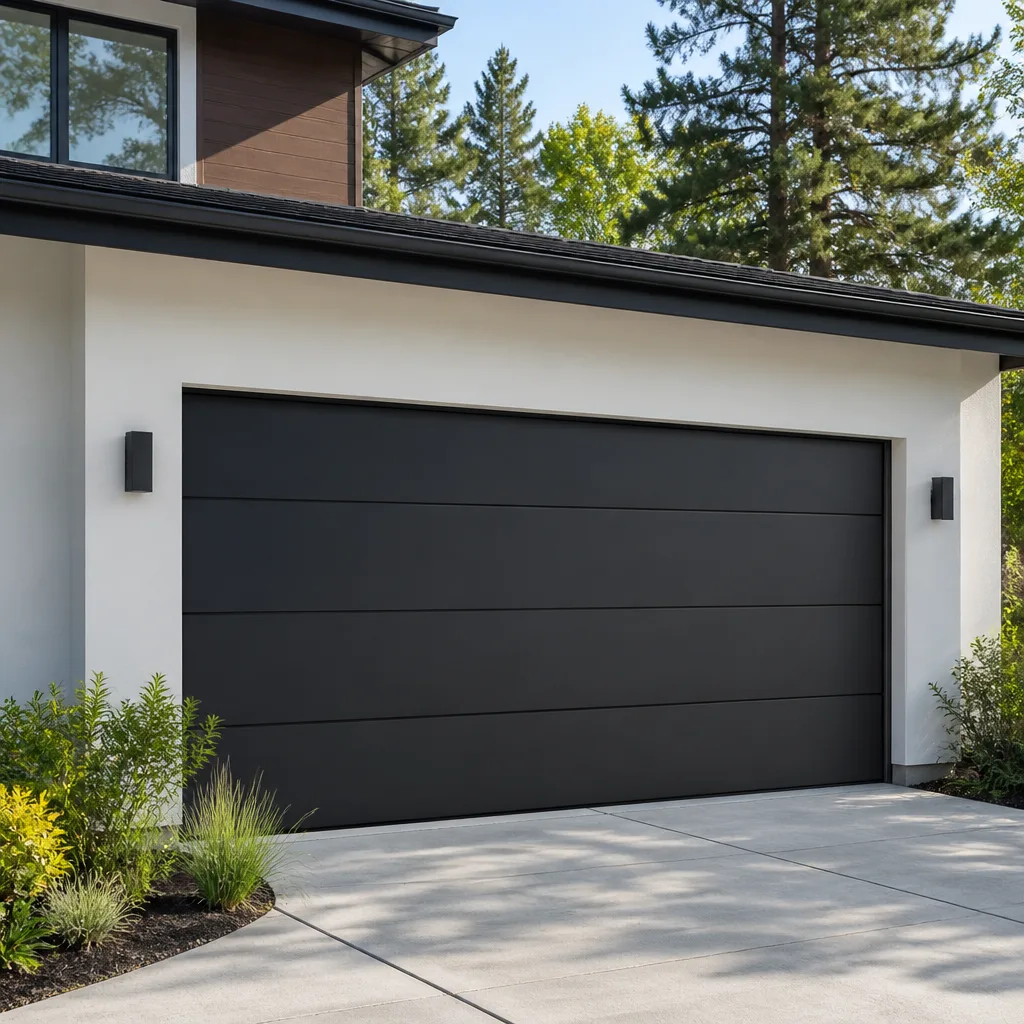 Modern flush
 LiftMaster openers
 Chamberlain openers
Full 25-point door and opener safety check with every visit - springs, cables, rollers, tracks, and your LiftMaster or Chamberlain opener included
You get a price before we start. It does not change when the pro arrives.
Get your free estimateThe Complete Guide to Garage Doors in Riverview
Most garage door advice online assumes a house built in 1975 with a door to match. Riverview doesn’t work that way. A large share of homes here went up after 2000, which means tens of thousands of households are now crossing the 15 to 20 year mark where the original builder-grade door and the original opener tend to fail in the same season. The spring snaps, the opener strains, and suddenly a system that opened quietly for two decades becomes the loudest thing in the house. This guide explains how Riverview’s humidity, construction, and community rules shape what your door actually needs. You’ll learn how to tell which tier of door you own, when repair makes sense, and when replacement is the honest answer.
Quick Answer
A garage door in Riverview that’s 15 to 20 years old and still running its original builder-grade springs and opener is usually at the end of its service life, and the first major failure is the signal to evaluate the whole system rather than patch one part. Riverview’s humid climate speeds up corrosion on springs, cables, and bottom seals, so annual lubrication and balance checks matter more here than the generic advice suggests. Repairs on a sound door are almost always worth doing; replacing hardware on a door with a rusted frame, cracked panels, and a tired opener often isn’t.
Styles & brands we work with
- Raised-panel steel
- Carriage house
- Modern flush
- Full-view glass
- LiftMaster openers
- Chamberlain openers
Table of Contents
- Why Riverview Humidity Is Hard on Door Hardware
- Builder-Grade vs. Mid-Tier vs. Premium Doors
- Door Widths and Headroom Constraints in Riverview Garages
- Repair or Replace? An Honest Breakdown
- How HOA Guidelines Shape Your Door Choice
- A Maintenance Routine That Fits Riverview
- Springs, Cables, and What You Should Never Touch
- What Garage Door Work Costs in Riverview
Why Riverview Humidity Is Hard on Door Hardware
Riverview runs warm and humid for much of the year, and that steady moisture does quiet damage to the steel and galvanized parts inside your door. Springs, cables, hinges, and bottom seals are the four components that feel it first. Standard national advice on garage door longevity tends to assume a drier climate, so the replacement intervals you read online often run longer than what we see locally. In practice, hardware here ages faster than the generic timelines suggest.
The mechanism is simple. High humidity keeps a thin film of moisture on unprotected metal, and that film is where rust starts. Springs are under constant tension, so a corroded coil loses strength and eventually snaps. Cables fray where they rub against a rusted drum. Bottom seals break down from moisture and heat, letting air, insects, and water into the garage.
What you can do about it, without touching the dangerous parts:
- Wipe down hinges and rollers with a light lubricant a couple of times a year rather than waiting for them to squeal.
- Look at the bottom seal for cracks and gaps where it meets the floor; a failing seal is one of the first signs humidity is winning.
- Watch for rust streaks on the door’s bottom section and along the track, which tell you moisture is collecting.
- Keep the garage ventilated where you can so damp air doesn’t sit against metal.
Lubrication slows the process. It doesn’t reverse it. When a spring is already visibly rusted or the door sounds different when it moves, that’s a job for a trained technician, not a can of spray. If you’re noticing those signs, our garage door repair service covers the hardware that humidity attacks first.
Builder-Grade vs. Mid-Tier vs. Premium Doors
Knowing which tier of door you own tells you a lot about how long it will last and which repairs are worth doing. Riverview’s newer subdivisions were largely built with builder-grade doors, and that’s the tier most homeowners here are working with, whether they realize it or not.
How to identify your tier
You can usually tell from the door itself, without pulling any paperwork:
- Builder-grade: single-layer steel panels, a thin gauge that flexes when you press it, no insulation, and a basic chain-drive opener paired with it. These are common in Riverview’s post-2000 construction corridors.
- Mid-tier: two-layer or insulated steel construction, a sturdier panel with visible bracing, and often a belt-drive or higher-end chain opener. You’ll see these in homes where the original buyer upgraded during construction.
- Premium: three-layer construction with a full insulated core, heavier hardware, and a smart opener with battery backup or app control. Less common in builder homes, more common where the door has already been replaced once.
Press on a panel. If it gives noticeably under your hand, you’re almost certainly looking at builder-grade. Open the door and listen: a rumbling, shaking builder-grade door with a straining opener is telling you its hardware is near the end of its life.
What tier means for your timeline
A builder-grade door paired with a builder-grade opener is the combination that hits the wall at the 15 to 20 year mark, and it usually does so all at once. The good news is that a mid-tier upgrade often outlasts the house’s original equipment by a wide margin, and if you’re replacing anyway, going one tier up is usually the better long-term spend than replacing like-for-like. We work on all tiers, from a simple builder-grade door that won’t close to premium systems from LiftMaster and Raynor.
Door Widths and Headroom Constraints in Riverview Garages
Riverview’s attached garages mostly follow standard widths, but the headroom above the door and the depth of the space vary more than homeowners expect, and those dimensions decide which opener and track will actually fit.
The common configurations you’ll find here:
- Single-car openings typically run around 8 to 9 feet wide, with a standard 7-foot height.
- Double-car openings commonly run 16 feet wide, again with a 7-foot height as the default.
- Headroom above the door is the constraint that surprises people. A low-headroom situation may need a different track setup or a side-mount opener, and a space with plenty of headroom leaves room for a standard rail system or a jackshaft design.
- Low-clearance ceiling in a smaller single garage can rule out certain openers entirely, so measure before you shop.
Why this matters: an opener chosen without checking the actual dimensions of your Riverview garage can end up too large, too small, or mounted in a way that fights the door. The track and opener need to match the space, and the door needs to balance correctly for whatever system is driving it. If you’re replacing a system, measure the opening width, the height, and the clear distance from the top of the door to the ceiling before you pick a model. If you’re doing our garage door installation, those measurements are part of the free estimate.
Repair or Replace? An Honest Breakdown
This is the question we get asked most, and the honest answer depends on the door’s condition rather than its age alone. A well-kept 18 year old door can have plenty of life left, and a neglected 12 year old door can already be a money pit.
Repairs that are usually worth doing
- Spring replacement on a structurally sound door is almost always the right call. Springs are a wear item, and replacing one doesn’t mean the door is failing.
- Opener repair on a door in good condition, especially a newer LiftMaster or Craftsman unit with a single failed component, is a fraction of the cost of replacing the whole system.
- New rollers, hinges, and a fresh bottom seal on a door whose panels are straight and whose frame is solid bring it back to quiet operation for a modest spend.
- Cable replacement when the door is otherwise sound; cables wear out and are a normal maintenance item.
Repairs that start to look like throwing money at a tired system
- Repeated opener failures on a builder-grade unit that’s already at the end of its life. If you’re on your second or third repair on the same opener, the replacement math usually wins.
- Rusted frames and cracked or bent panels. When the door’s structure is compromised, new hardware on top of it doesn’t fix the underlying problem.
- A door that won’t hold an adjustment. If it comes out of balance again shortly after a tune-up, the door itself is the issue.
The honest version: repair makes sense when the door is sound and one wear item has failed. Replacement makes sense when multiple systems fail together, the structure is compromised, or the energy losses and repair bills start adding up on a builder-grade door that’s already past its service life. In Riverview, where so much of the housing stock is crossing that threshold at the same time, we see both kinds of situations regularly. If you’re unsure which side of the line you’re on, our garage door opener repair and general repair teams will tell you straight, and the estimate is free.
How HOA Guidelines Shape Your Door Choice
Many of Riverview’s newer communities have HOA architectural guidelines, and they can affect what you’re allowed to install before you’ve spent a dollar on a new door. If your home sits in one of these communities, check your guidelines first and confirm the approval process before you order anything.
What to check:
- Color and finish. HOAs often specify an approved palette and restrict finishes that don’t match the community’s look.
- Panel style. Raised-panel, carriage-house, and flush styles may be treated differently, and some communities require a specific look.
- Window and hardware options. Decorative hardware and window inserts may need approval if they change the door’s appearance from the street.
- Approval process. Most HOAs want an architectural review request before installation, with product details and sometimes a photo or sample. Get the approval in writing and keep it on file.
The trap is ordering a door you love and then discovering it doesn’t meet the community’s guidelines. That’s a call you don’t want after the door has been built. When we quote a replacement in Riverview, we’ll flag the approval question early so you can handle it before the order goes out, and we’re familiar with the styles that pass review in the area’s newer subdivisions.
A Maintenance Routine That Fits Riverview
A little routine attention goes a long way in this climate, and most of it is safe to do yourself. Here’s the sequence we recommend for Riverview homeowners, built around the humidity and the way these doors age here.
- Lubricate hinges, rollers, and tracks with a garage-door-safe lubricant a couple of times a year. Don’t use grease that collects grit.
- Test the balance monthly. Disconnect the opener, lift the door halfway, and let go. A balanced door stays put; a door that drops or rises on its own needs a professional adjustment.
- Inspect the bottom seal for cracks, gaps, and brittleness. In Riverview’s heat your seal breaks down faster than the national advice assumes, so look at it more often than once a year.
- Wipe down the hardware and watch for early rust. Catching it early means a wipe, not a replacement.
- Test the safety reverse monthly. Put a small object under the closing door and confirm it reverses on contact. This is a safety feature, not a convenience.
- Listen. A door that sounds different, shakes, or moves unevenly is telling you a component is wearing. That’s a call for professional service, not a wait-and-see.
Keep it to this list and you’ll get more years out of your hardware than the neighbors who wait for something to break. Anything beyond lubrication and visual inspection belongs to a trained technician. For the parts that wear out, our garage door spring repair specialists handle the springs and cables so you don’t have to think about them until the next tuning.
Springs, Cables, and What You Should Never Touch
Garage door springs and cables are the most dangerous parts of the whole system, and they deserve a clear warning. Springs are under heavy tension, and when one fails it releases that energy suddenly. Cable systems are under similar load. This is not a repair to attempt on your own, regardless of what an online video shows.
Here’s the part worth understanding without touching anything. A torsion spring stores the energy that counterbalances the door’s weight; a door that suddenly feels too heavy to lift usually means a spring has failed. Extension springs, common on older builder-grade doors, run along the sides of the track and fail the same way. Cables carry the load at the corners, and a frayed cable is a warning that a failure is coming.
What you should do when a spring breaks:
- Leave the door closed if you can, and don’t force it up or down.
- Keep clear of the door, the tracks, and anything hanging in the path.
- Call a specialist. Spring work requires the correct tools, matched parts, and the knowledge to balance the door after the swap.
- Don’t use the opener to try to lift a door with a broken spring; an opener is designed to move a balanced door, not lift a dead one.
Every manufacturer we work with, from LiftMaster to Wayne Dalton, makes hardware that’s engineered to a specific tension and travel. Getting the spring and cable matched to your exact door is what makes the repair safe and long-lasting. That’s why we treat spring repair as its own specialty, and why we ask you to let a technician handle it. For a door that’s stuck, our emergency garage door service is here for the situations that can’t wait.
What Garage Door Work Costs in Riverview
Costs here are typical estimates for the area, and the written quote sets the final price. We give you a range up front, and you’ll get an exact number before any work starts.
| Job | Typical Range (estimate) |
|---|---|
| Single spring replacement | $180 – $340 |
| Matched pair of springs (usually replaced together) | $360 – $680 |
| Opener repair | $150 – $320 |
| New opener install | $320 – $650 |
| Full door replacement (standard single) | $900 – $2,200 |
| Full door replacement (double) | $1,400 – $3,200 |
The table gives you a range to plan around. What moves the number within that range is the door’s size, the hardware tier, the opener model, and whether the job is a straight swap or a repair on a system that’s been neglected. Spring prices in the table are for one spring. A matched pair is usually replaced together, so a pair costs about twice the single-spring figure. We’ll always tell you whether one spring or both need to go before we quote the work.
If you want the full picture on a specific job, they’re free. Call (866) 885-7049 and we’ll walk you through the options for your door.
Common Mistakes to Avoid
- Trying to fix a spring yourself. A spring that’s failed stores sudden energy and can injure anyone in its path. Leave it to a technician with the right tools and matched parts.
- Ignoring the humidity. A door that squeals and shudders in a Riverview garage is telling you its hardware is dry and starting to rust. Waiting for a failure is the expensive option.
- Ordering a door before checking HOA guidelines. Buying first and asking later can leave you with a door your community won’t approve. Confirm the style and color before you order.
- Replacing parts on a door that’s structurally tired. New springs on a rusted frame or a bent door don’t fix the underlying problem; they just delay the honest decision.
- Measuring headroom by eye. Opener fit depends on the actual clear distance above the door. Get the measurements before you choose a system, or let a technician measure for you.
- Mixing a new opener with an old door that’s out of balance. The opener will strain, and you’ll replace one or the other again sooner than you should.
- Waiting for the door to fail before scheduling any maintenance. In Riverview’s climate, a couple of small maintenance tasks a year are what keep a builder-grade door lasting well past the fifteen year mark.
See the difference
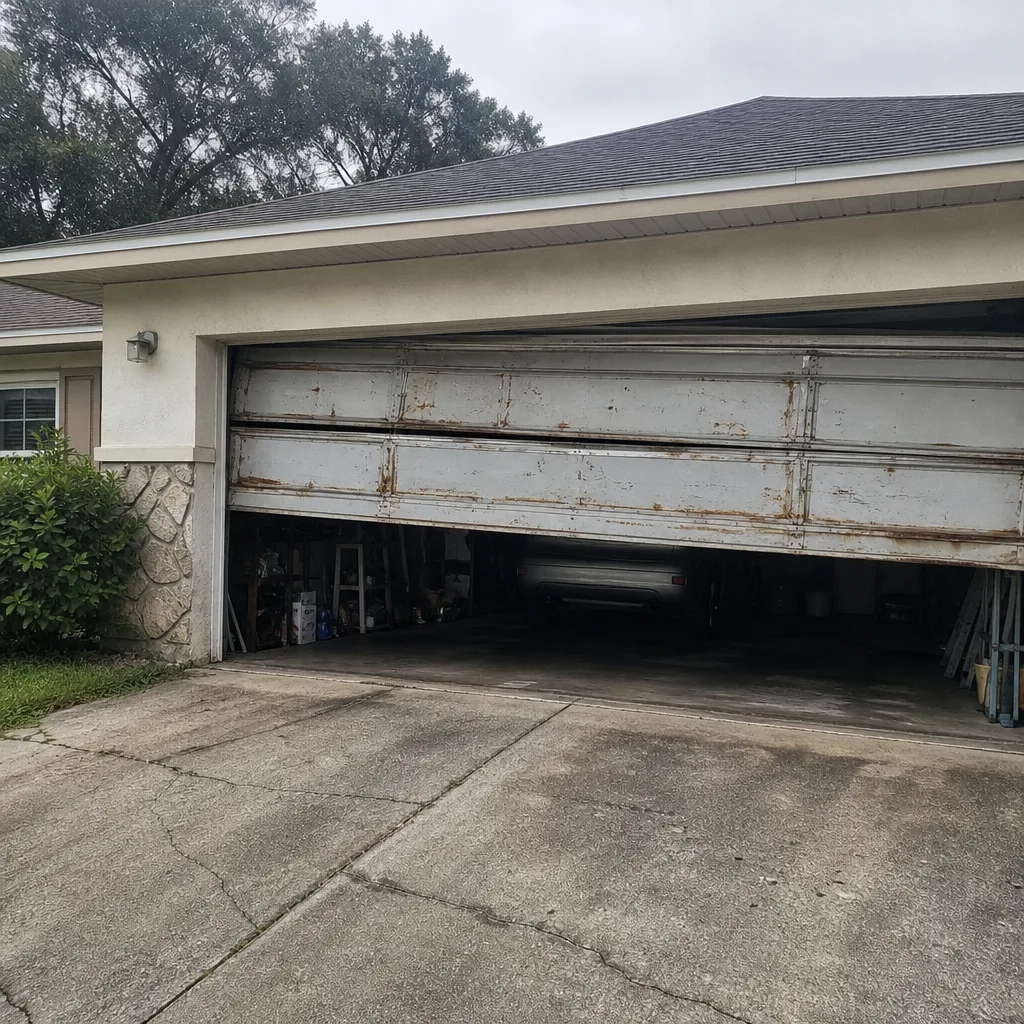 Before
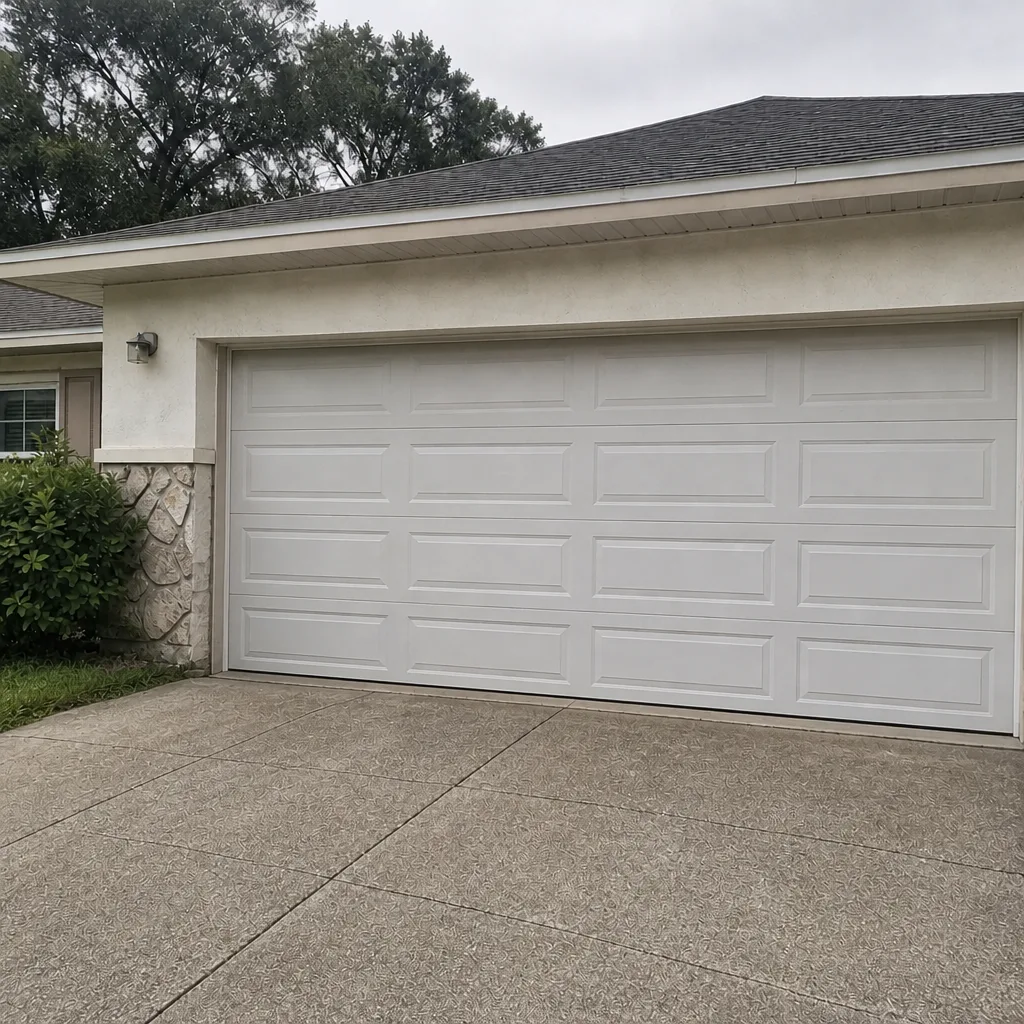 After
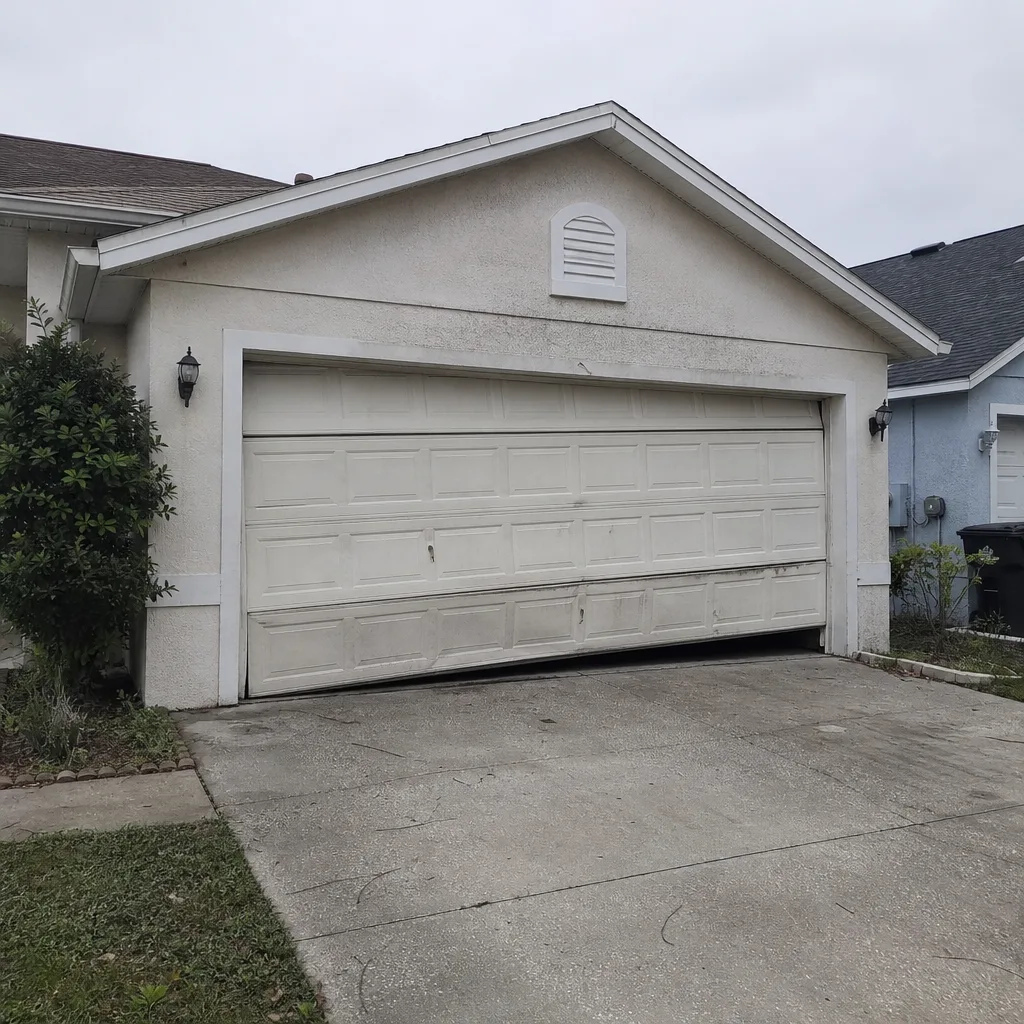 Before
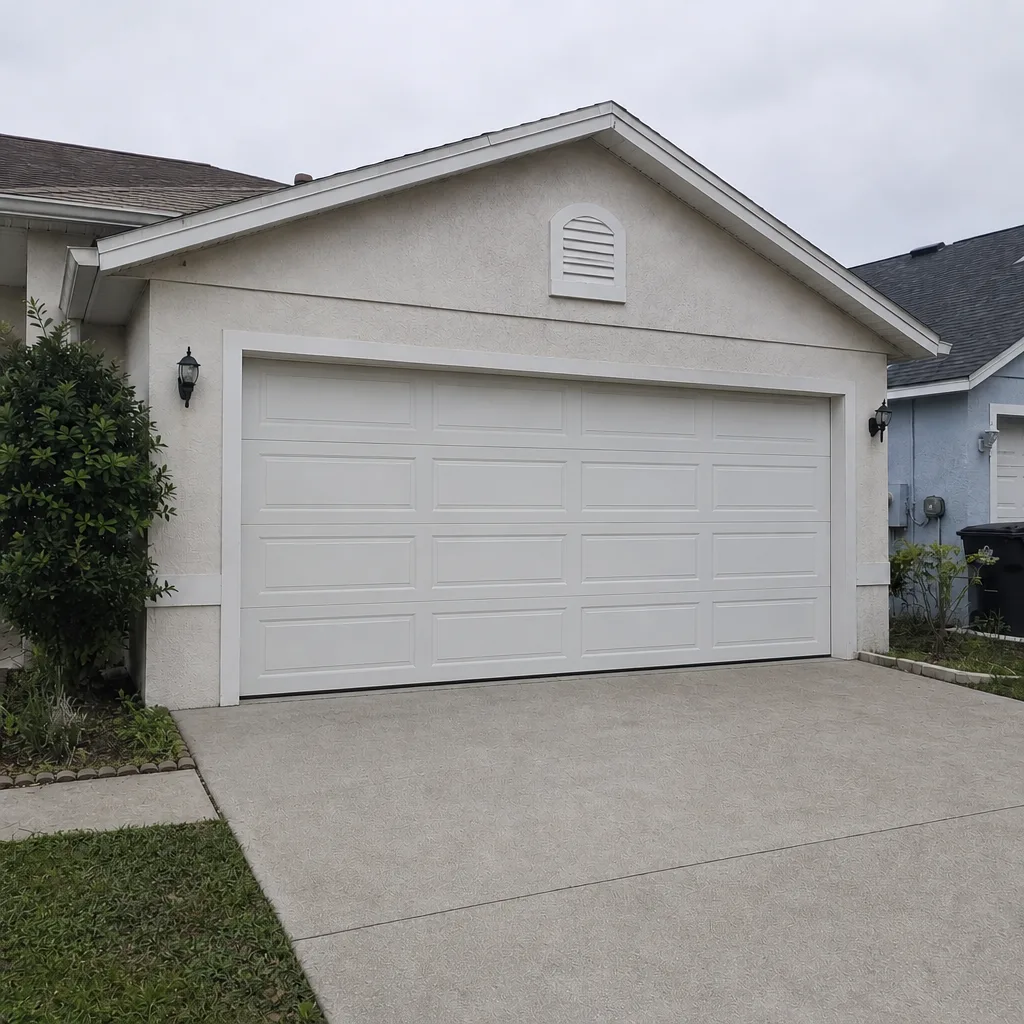 After
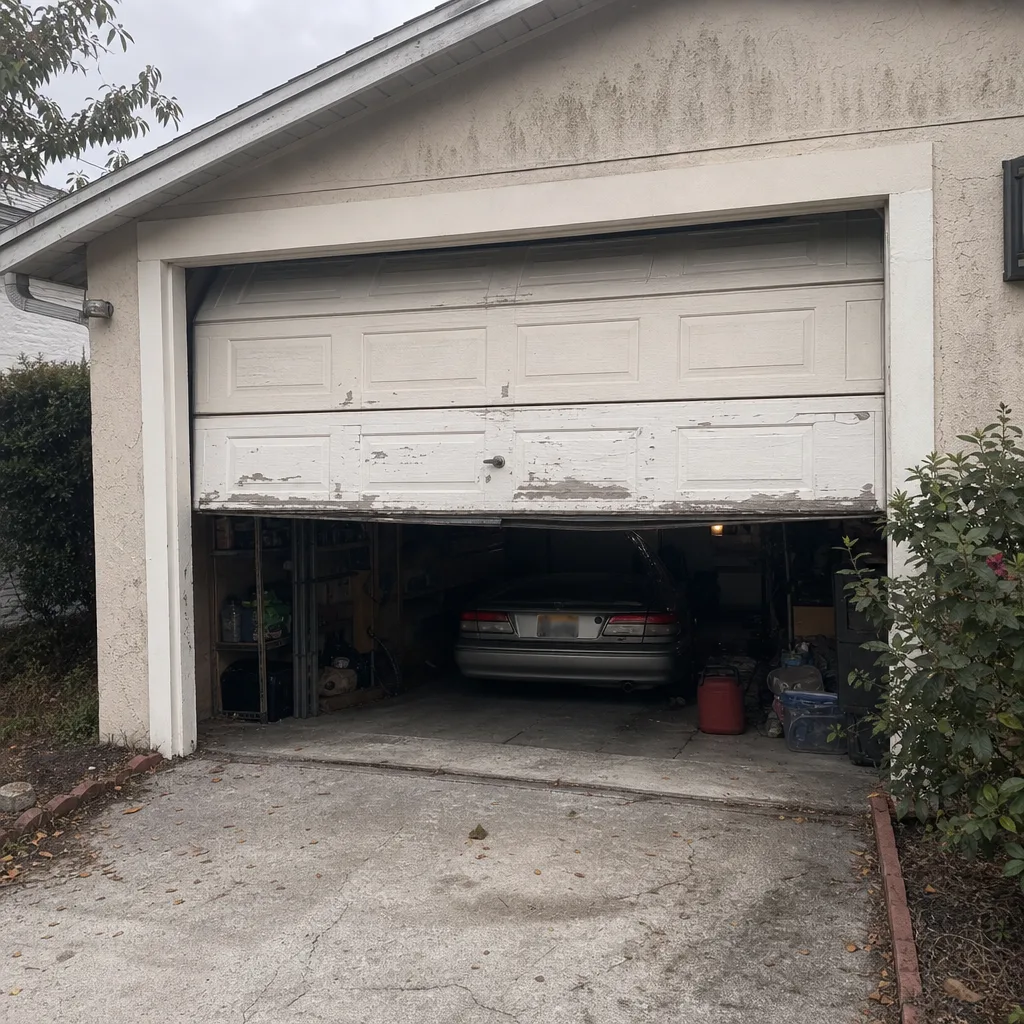 Before
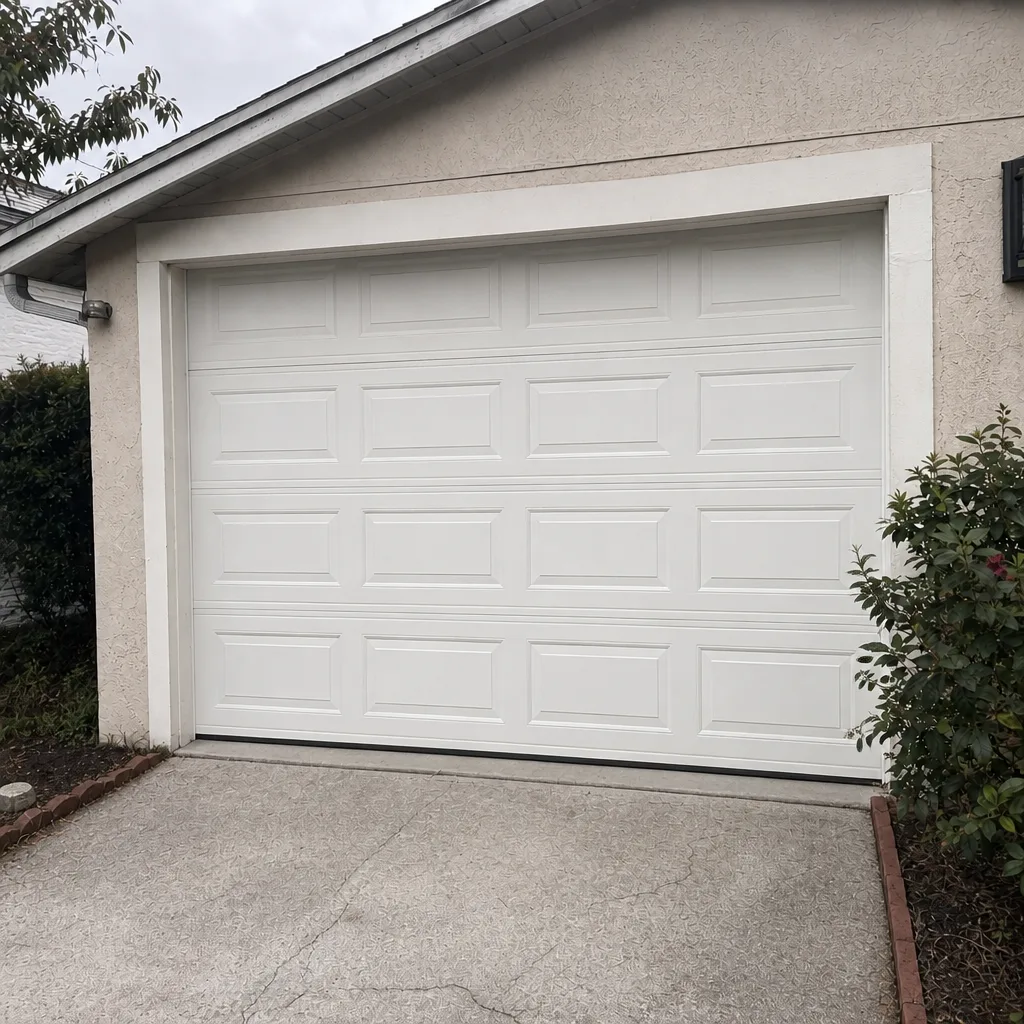 After
When to Call a Professional
Some things are fine to handle yourself: a squeak, a little rust you can wipe down, a visual check of the seal. But certain situations deserve a call right away. A door that won’t open or close, a spring that’s visibly broken, a cable that looks frayed, an opener that runs but doesn’t move the door, or a door that’s come off its track. Anything involving springs or cables is a hard stop; don’t touch it. And if you’re on a newer Riverview home and the door is starting to sound different or feel uneven, calling early often turns a replacement into a repair.
Riverview Garage Door Repair Pros offers free estimates in Riverview. Call (866) 885-7049. Our technicians have up to 14 years of experience, we work on the major brands you already have, and one call covers the whole system, repair or replacement.
Frequently Asked Questions
A builder-grade door and opener combination typically reaches the end of its service life around 15 to 20 years, and in Riverview’s humidity it can age faster than the national timelines suggest. Keeping up with lubrication and balance checks is what extends that window. If your home is in that age range and the door is making new noises, an inspection is worth the call.
Press on a panel: if it flexes noticeably under your hand and feels thin, you’re likely looking at builder-grade. These are single-layer steel doors with little insulation, usually paired with a basic opener, and they’re common in the newer Riverview subdivisions. You can usually confirm the tier without any paperwork.
Repair is usually cheaper when the door’s structure is sound and one wear item has failed, like a single spring or an opener component. Replacement often makes more sense when several systems fail together, the frame is rusted, or the panels are cracked. Our technicians give you an honest answer and a written price before any work starts, so you can compare properly. Call (866) 885-7049 to talk through your situation.
In many cases, yes. Spring and opener failures are the kind of repair we can usually handle quickly because they don’t require ordering parts or a new door. A full door replacement is different; that work involves measuring and ordering, so it gets scheduled rather than done same-day. Call us and we’ll tell you what’s realistic for your door.
If your community has architectural guidelines, yes, usually before you order the door. HOAs often specify approved colors, styles, and window options, and most want a review request with product details. Get the approval in writing first, then order. We can help you work through the style questions so the door you pick is likely to pass review.
The local pros we connect you with are licensed and insured as their state requires. They’re trained to handle both mechanical and electronic components, from springs and cables to openers from brands like LiftMaster, Chamberlain, and Genie. We also specialize in spring repair because it’s the most technically demanding part of the job, so the person working on your door knows exactly what they’re doing.
The Bottom Line
Riverview’s garage doors are aging as a group, not one at a time. Most of the housing stock was built after 2000, which means a big share of homes here are facing the 15 to 20 year failure window on their original builder-grade equipment. The humidity makes it harder on springs, cables, and seals. The right move is to know your door’s tier, measure before you buy, check the HOA first, and treat small maintenance as a way to put off big repair. When something breaks, especially a spring or cable, let a specialist handle it.
Riverview Garage Door Repair Pros covers repair, opener repair, springs, installation, and emergency service in Riverview. Call (866) 885-7049 for a free estimate, and we’ll give you a clear answer and a written price before any work starts.
Written by the team at Riverview Garage Door Repair Pros.