Last updated November 21, 2026
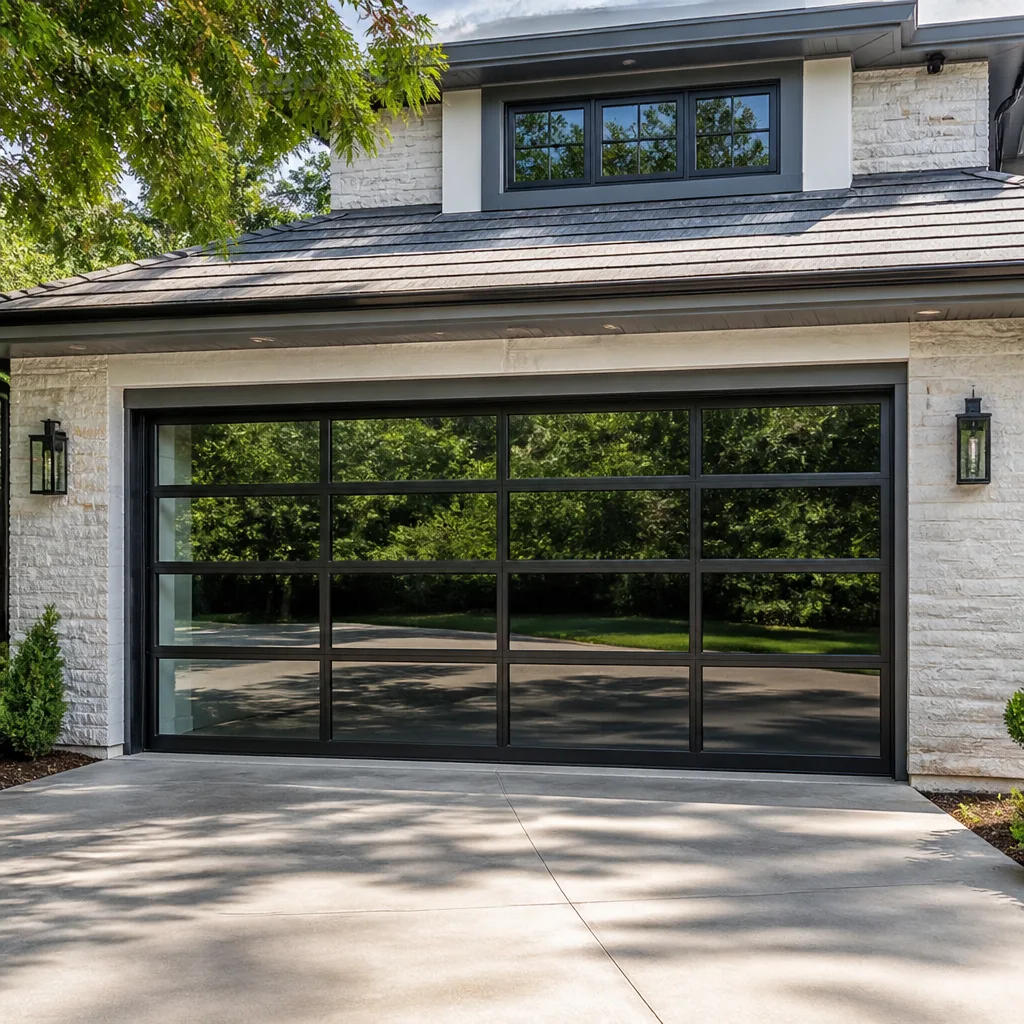 Full-view glass
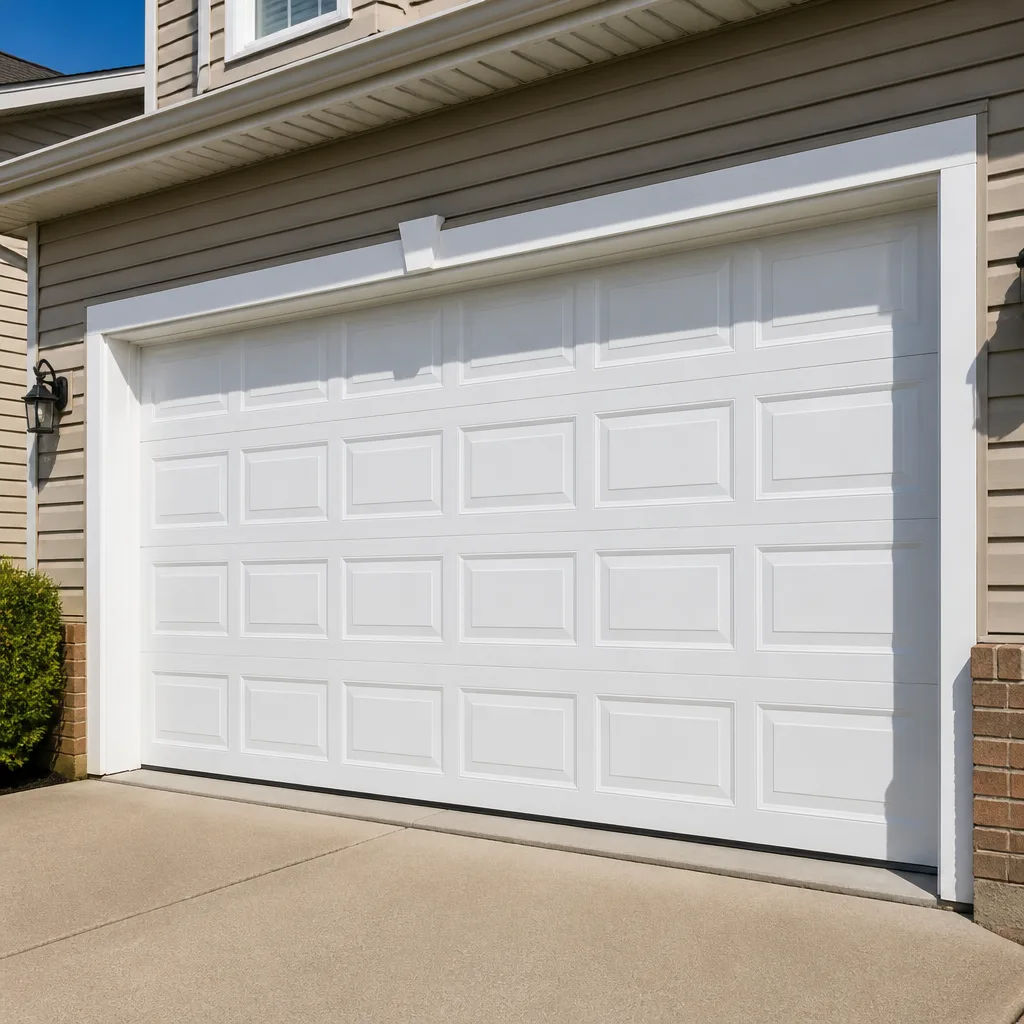 Raised-panel steel
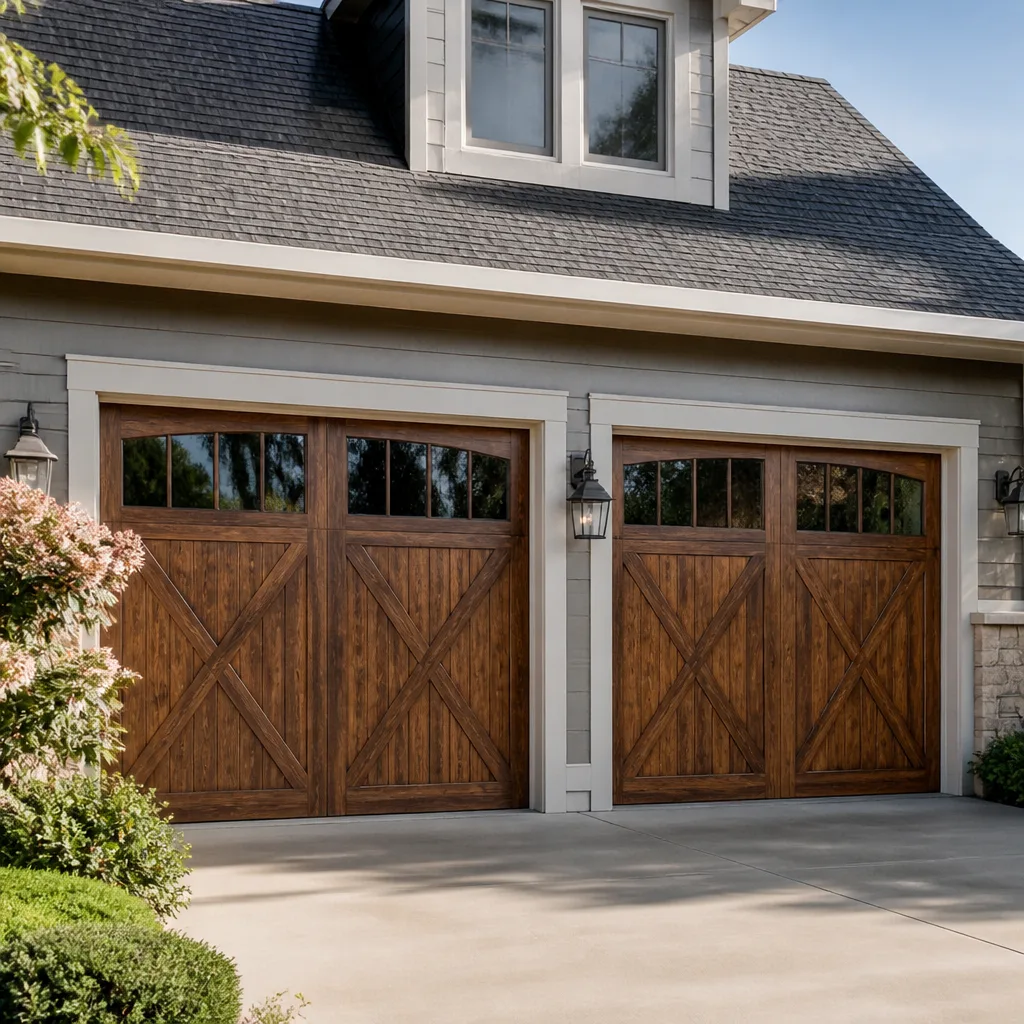 Carriage house
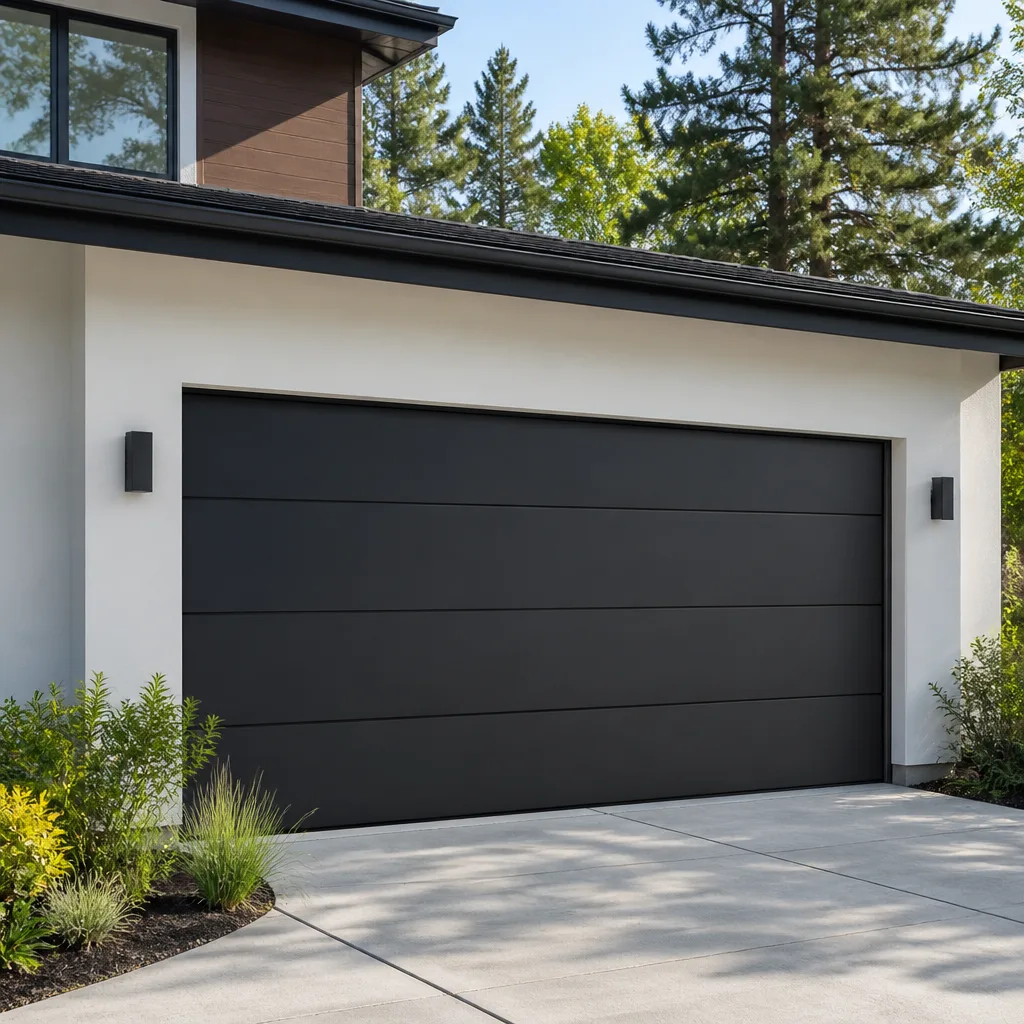 Modern flush
 LiftMaster openers
 Chamberlain openers
Full 25-point door and opener safety check with every visit - springs, cables, rollers, tracks, and your LiftMaster or Chamberlain opener included
You get a price before we start. It does not change when the pro arrives.
Get your free estimateSeasonal Garage Door Care for Riverview: Year-Round Homeowner’s Guide
Most garage door care advice was written for places with four real seasons, and it doesn’t fit here. Riverview runs on a different calendar: a dry season that quietly dries out wood and weatherstripping, a wet season that works on your bottom seal and exposed hardware every afternoon, and a hurricane prep window in late spring that a lot of homeowners skip entirely. The result is a maintenance rhythm that surprises people. The calls we get in January and February are usually about cracked seals and shrinking panels, not summer heat. This guide walks through each window of the Riverview year, what to check, what to leave alone, and when a door has moved past maintenance into repair. You’ll finish knowing what your door actually needs in this climate and when to call a specialist.
Quick Answer
Seasonal garage door care in Riverview means testing your door’s balance, seals, and opener before hurricane season in May, inspecting bottom seals and hardware through the wet months from June to September, lubricating springs and inspecting cables during the dry season from October to February, and doing a full post-storm inspection after any named storm or severe thunderstorm before you run the door again. The biggest maintenance gains come from matching each task to the season that stresses that component, not from running the same checklist year-round.
Styles & brands we work with
- Raised-panel steel
- Carriage house
- Modern flush
- Full-view glass
- LiftMaster openers
- Chamberlain openers
Table of Contents
- Why Riverview’s Calendar Isn’t Four Seasons
- Pre-Hurricane Season Checklist for May
- Wet Season Care: June Through September
- Dry Season Care: October Through February
- Post-Storm Inspection Protocol
- Temperature Swings and Opener Sensitivity
- Springs, Cables, and What You Should Never Touch
- Riverview Month-by-Month Maintenance Calendar
Why Riverview’s Calendar Isn’t Four Seasons
Riverview doesn’t get a slow ramp into summer and a slow ramp out. It gets a wet season, a dry season, and a storm prep window that arrives with the first named storm forecast. Each of those windows stresses different parts of your garage door, and a lot of the generic maintenance advice you’ll find online assumes cold winters and dry summers, which is close to the reverse of what happens here.
Here’s how the parts of your door respond to each window:
- Wood panels and frames contract when humidity drops in the dry season and swell when it climbs in the wet season. Panels that look fine in July can show hairline gaps at the seams by January.
- Weatherstripping and bottom seals flex constantly during the wet months, then dry out and harden during the dry months. That hardening is why January and February generate more seal replacement work in the Riverview market than August does.
- Exposed hinges, rollers, and track hardware see moisture every afternoon through the wet season, so surface corrosion shows up faster on doors with light-gauge hardware than on doors with heavier plated hardware.
- Opener sensitivity settings drift with temperature, which causes false reversals that homeowners often read as a failing opener.
- Springs and cables cycle hundreds of times over the year and don’t care much about the season, but they’re easier to inspect and lubricate in the dry months when humidity isn’t hiding wear under surface moisture.
The practical takeaway: Riverview garage door maintenance is less about doing more and more about doing the right thing in the right month. The rest of this guide is organized around that idea.
Pre-Hurricane Season Checklist for May
May is the window when a garage door should get its full annual inspection, because a storm forecast leaves no time for anything but securing what you already have. Work through the list below before storm activity begins.
- Test the manual release. Pull the red release handle with the door closed. The door should disconnect from the opener and move by hand without binding. If the release doesn’t engage cleanly or the door won’t lift once released, that needs repair before storm season.
- Check balance by hand. With the door disconnected, lift it to waist height and let go. A properly balanced door stays put. A door that drifts down has a spring that’s lost tension.
- Inspect the bottom seal. Run a hand along the seal where it meets the floor. Any gap, tear, or hardening is a candidate for replacement before storm-driven rain finds it.
- Look at the wind brace hardware. Wind-rated doors use brace hardware along the panels. Check that the fasteners are present, seated, and not corroded. Don’t add reinforcement hardware on your own; that needs to match the door’s rating.
- Test the opener’s safety reverse. Place a small object on the floor in the door’s path and close the door. The door should reverse on contact. If it doesn’t, that opener needs attention.
- Clear the tracks and lubricate the moving parts. Wipe the tracks clean, then lubricate rollers, hinges, and the spring with a garage door lubricant. Don’t use WD-40 as a substitute for a proper lubricant.
- Check the opener’s battery backup. Most LiftMaster and Chamberlain openers have a battery backup for power outages. Test it before storm season so you know it works when you need it.
If any item on the list turns up something you’re not comfortable evaluating, that’s the point in the year to schedule it. Riverview Garage Door Repair Pros handles the full scope, so a stuck door, a loose brace, or an opener that won’t reverse can all get looked at in one visit. Free estimates are standard, and May is when we recommend booking early, because the closer the first storm gets to Riverview, the harder it is to fit an inspection in.
Wet Season Care: June Through September
Daily rain cycling is the defining stress of the wet season. Two things wear fastest: the bottom seal where it meets the floor, and any exposed hardware that holds moisture between cycles. The wet season is not the time to do heavy maintenance, because anything you lubricate or adjust will be re-tested by rain within a day. It’s the time to watch for early warning signs.
What wet season rain cycling does to your door
- Bottom seals degrade from the floor up. The seal rests against concrete that holds moisture after a hard rain, so it stays wet longer than the rest of the door. A seal that was fine in April can show softening and surface cracks by July.
- Floor contact points puddle. If your garage slab has any slope toward the door or a small low spot near the threshold, water will pool there during the wet months. That’s the seal’s worst environment, and it’s why doors on slabs with visible slope need seal checks more often here.
- Exposed hardware corrodes faster. Hinges, rollers, and track hardware with light plating will show surface rust by August in Riverview if they aren’t lubricated and wiped periodically.
- Panels swell at the seams. Wood doors and wood-framed doors take on moisture and show it at joint lines. A hairline gap in June can widen by September.
- Openers take weather. The opener body is usually well protected, but the safety sensors on the track mounts see splash and spray from the floor. Dirty sensors read as a “stuck” opener that isn’t actually broken.
What to do during the wet months
- Wipe down the bottom seal monthly and look for tears, soft spots, or separation from the door bottom.
- Clear any standing water at the threshold with a sweep or by re-grading; leave the slab itself alone.
- Check the safety sensors are clean, aligned, and free of splash residue. A dirty sensor is the most common cause of a door that won’t close on a wet afternoon.
- Rust-check the hinges and rollers every six to eight weeks. Any orange surface film on a roller or hinge is worth a look; surface rust on a hinge pin is normal after a decade, but rust on a roller bearing is not.
- Listen for a change in sound. A door that sounded smooth in May and grinds in August is telling you about a roller or hinge that needs attention.
If the bottom seal does need replacement mid-season, that’s a straightforward job. If the door starts reversing intermittently or makes a scraping noise on the way down, call for garage door repair rather than waiting for October. Small problems during the wet season have a way of turning into stuck doors by the fall.
Dry Season Care: October Through February
The dry months are the right window for the tasks that need stable conditions: spring lubrication, cable inspection, and opener sensitivity calibration. The humidity drop makes inspection cleaner because wear on cables and springs shows up better without surface moisture, and lubricant stays put instead of washing off within days.
What the dry season changes on your door
- Wood panels contract. The seams that swelled in August show hairline gaps by December. Any gap you can see in the dry season is worth a look, because that’s the gap that will let rain into the joint the following June.
- Weatherstripping hardens and cracks. This is the single biggest reason Riverview sees more seal replacement calls in January and February than in summer. Rubber that flexed all year dries out and loses its rebound in the low-humidity months.
- Hardware stops pitting. The dry season gives you a clear view of what the wet season did. Surface rust that appears in October and November is wet-season damage you can address before it becomes structural.
- Opener performance changes. Cooler nights and warmer days push temperature swings that affect opener force settings, causing doors to reverse partway down and read as an opener failure when the opener is fine.
What to do during the dry months
- Lubricate the torsion spring. A light coat of garage door lubricant on the spring coils reduces wear. Don’t spray heavy grease; it collects grit.
- Inspect the cables. Look for fraying, kinks, or rust at the drum and at the bottom corners. Cables under tension are dangerous to handle; inspect visually from a distance and call a professional for anything you can’t see clearly.
- Check the seal and weatherstripping. A hardened seal or cracked weatherstrip is a simple replacement now and a water problem later.
- Calibrate opener sensitivity. Test the safety reverse and the force settings. Adjusting them is usually a matter of a couple of dials or a setting in the opener’s app for LiftMaster and Chamberlain models with smart features.
- Have the door balanced and inspected. This is the best month for a professional inspection because the door is working in its most stable conditions.
If your door’s hardware has started to look tired or a spring has stopped doing its job, the dry season is the right time to schedule the fix. garage door spring repair during the dry months means you’re not trying to get a specialist out during the wet season, when we’re busier with water and seal calls.
Post-Storm Inspection Protocol
After any named storm or severe thunderstorm event in Riverview, don’t run the door until you’ve done a basic inspection. A door that took a hard wind hit can look fine from inside and have a bent track or a misaligned panel that will jam or come off when the opener pulls it.
- Look at the door from outside first. Any panel out of plane, any visible gap at the seams, any obvious dent or bend in the track is a sign the door took damage. Don’t run the opener.
- Check the track and frame. Tracks that got wind or debris pushed against them will pull the door sideways as it moves.
- Check the seal and threshold. Wind-driven rain often pushes water under the door. If there’s standing water inside, clear it and dry the seal before you run the door.
- Look for debris in the opener path. Palm fronds, roof gravel, and small limbs are common. Anything in the photo-eye line will read as an obstruction.
- Test the manual release. If the door opens by hand cleanly, it’s safe to reconnect and try the opener. If it binds, stop.
- Test the safety reverse before you rely on the opener. If the door doesn’t reverse on contact, the opener is not safe to use until it’s repaired.
If any step turns up damage you can’t diagnose confidently, call before running the door again. A jammed door that’s been forced by the opener usually turns a repair into a replacement. For a door that won’t move after a storm, our emergency service is available and the line stays open when the weather is at its worst. A free estimate for anything short of an emergency is the standard, and it’s quoted before any work begins.
Temperature Swings and Opener Sensitivity
Florida’s temperature swings, even the subtle ones, change how much force your opener needs to move the door. A door that closes smoothly at 85 degrees may reverse partway down at 65 degrees. That’s usually not an opener failure – it’s a sensitivity setting that’s set too tight for the door’s actual resistance in cooler air.
What’s actually happening: the opener measures resistance on the door as it travels. Cooler air stiffens the rollers, the seal, and the lubricant on the tracks, so the door offers more resistance than it did an hour earlier. If the opener’s force setting is already close to the door’s actual resistance, the door trips the safety reverse and comes back up partway.
How to tell a sensitivity issue from a real opener failure:
- Intermittent, weather-linked reversal usually means sensitivity, not a failing motor. If the door works fine at midday and reverses at dawn, that’s a good sign the opener is fine and the setting needs calibration.
- Reversal at the same point every time usually means something mechanical: a track kink, a worn roller, or a binding hinge. That’s not a sensitivity issue.
- Reversal only after rain usually means a dirty or misaligned photo-eye sensor, not a broken opener.
- Reversal only when cold usually means the force setting is close to the edge and needs adjusting.
On LiftMaster and Chamberlain openers with smart features, sensitivity is often adjustable in the app. On Genie and Craftsman openers, it’s typically a set of dials on the opener body or a programming sequence. If you’re not sure which applies to your model, garage door opener repair is the right call rather than a trial-and-error adjustment. Our technicians have up to 14 years of experience across the eight major brands, so the setting for your model is a known quantity, not a guess.
Springs, Cables, and What You Should Never Touch
Springs and cables are the two parts of your garage door system where the maintenance advice is simple: leave them alone unless you’re a trained technician. The torsion spring above your door is under enough tension to cause serious injury if it’s released unexpectedly, and the cables that run through the drums are under the same tension. A broken spring can sound like a gunshot when it goes, and a cable that snaps can whip. We treat spring repair as a standalone specialty for exactly this reason.
What you can safely do to support spring and cable health:
- Listen and watch. A door that’s getting noticeably heavier to lift by hand, or a door that drifts down when released at waist height, is telling you the spring has lost tension. That’s a spring repair call.
- Look at the spring from a distance. A gap in the spring coils, a spring with a visible stretch, or a snapped spring section hanging from the torsion bar all mean the door should not be run until it’s repaired.
- Look at the cables, don’t touch them. Fraying at the bottom corners, rust at the drum, or a cable that appears slack are all signs to call. Do not attempt to adjust or re-seat a cable.
- Keep the gap clear. Don’t store anything directly under the torsion bar or against the springs. A spring that snaps sends fragments outward.
- Lubricate the spring during the dry season only if you can reach it safely from the floor with the door closed. If you need a ladder, that’s a professional job.
If your door is heavy to lift, noisy on the way up, or has started to sag at one corner, that’s your cue to stop using the opener and call for spring repair. Springs handled safely by a trained technician is the only kind of spring handling we recommend. The same goes for cable work.
Riverview Month-by-Month Maintenance Calendar
Here’s the whole year in one place. Use it as a schedule, and adjust based on what your door tells you in each window.
- January and February: Seal and weatherstrip check, because the dry season hardens rubber. Spring lubrication. Look for the hairline seams that opened up on wood panels.
- March and April: Opener sensitivity check before the heat sets in. Clear tracks and lubricate rollers. Test the battery backup.
- May: Full pre-hurricane inspection. Manual release test, balance test, wind brace check, safety reverse test, seal check. This is the biggest single window in the year.
- June and July: Wet season starts. Watch the bottom seal and threshold for water pooling. Clean the safety sensors monthly. Rust-check hinges and rollers.
- August and September: Peak wet season. Keep the door moving through the wet months; a door that sits closed for weeks and then runs can bind on hardware that’s taken on moisture.
- October and November: Dry season assessment. Note what the wet season did, and schedule any repairs now rather than in the spring.
- December: Final balance check and a look ahead at what your door will need before May. Any pending spring or cable issue should be handled before the next storm season.
That’s a lot of small tasks across a year, and most of them are things you can do yourself in a few minutes. The two that need a professional are the spring and cable work, plus any inspection that finds something you can’t diagnose from the floor. The other item on the calendar that’s worth scheduling early is the May inspection. That’s the window where a specialist can catch what a homeowner checklist misses, and it’s the window that closes fastest once storm forecasts start.
Common Mistakes to Avoid
- Running the same year-round checklist as a cold-climate door. A checklist built for freezing winters will tell you to focus on the wrong parts at the wrong times. In Riverview the seal and weatherstrip wear in the dry season, not the wet season, and that’s where most of the damage gets done.
- Skipping the May inspection because no storm is forecast. The window before storm season is when a specialist can address a small issue cheaply. After the first named storm tracks toward the area, scheduling tightens and small repairs get pushed to the back of the line.
- Lubricating with WD-40 instead of a proper garage door lubricant. WD-40 displaces water and then evaporates. It leaves the hinge and roller dry, which is worse than before you sprayed.
- Adjusting the opener’s force setting upward to stop a reversal. That’s the fix that turns a sensitivity issue into a broken door. If the door reverses, find out why before you change the opener’s settings, and if the reverse is weather-linked, calibrating correctly is usually the whole answer.
- Ignoring a hard, cracked bottom seal until it lets water in. A seal is an inexpensive maintenance item. Waiting until it fails usually means wet floors, water inside the garage, and sometimes a rusted bottom section of the door.
- Running the door after a storm without inspecting it. A bent track or misaligned panel doesn’t usually stop the door from moving. It stops the door from moving correctly, which is how a repair becomes a replacement.
- Letting the garage door “rest” through the wet season. A door that sits closed for weeks and then runs on the first cool morning will usually bind on hardware that’s taken on moisture. Run it once a week to keep it moving.
See the difference
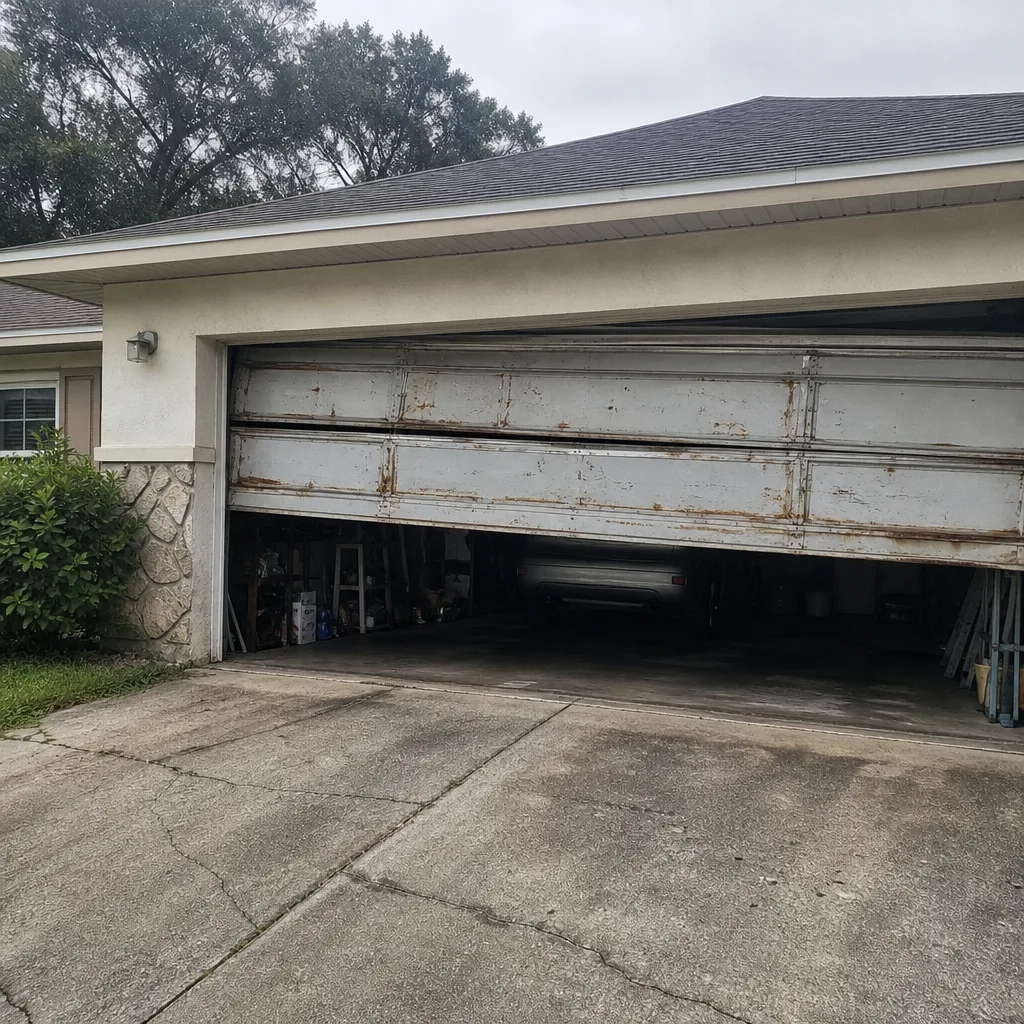 Before
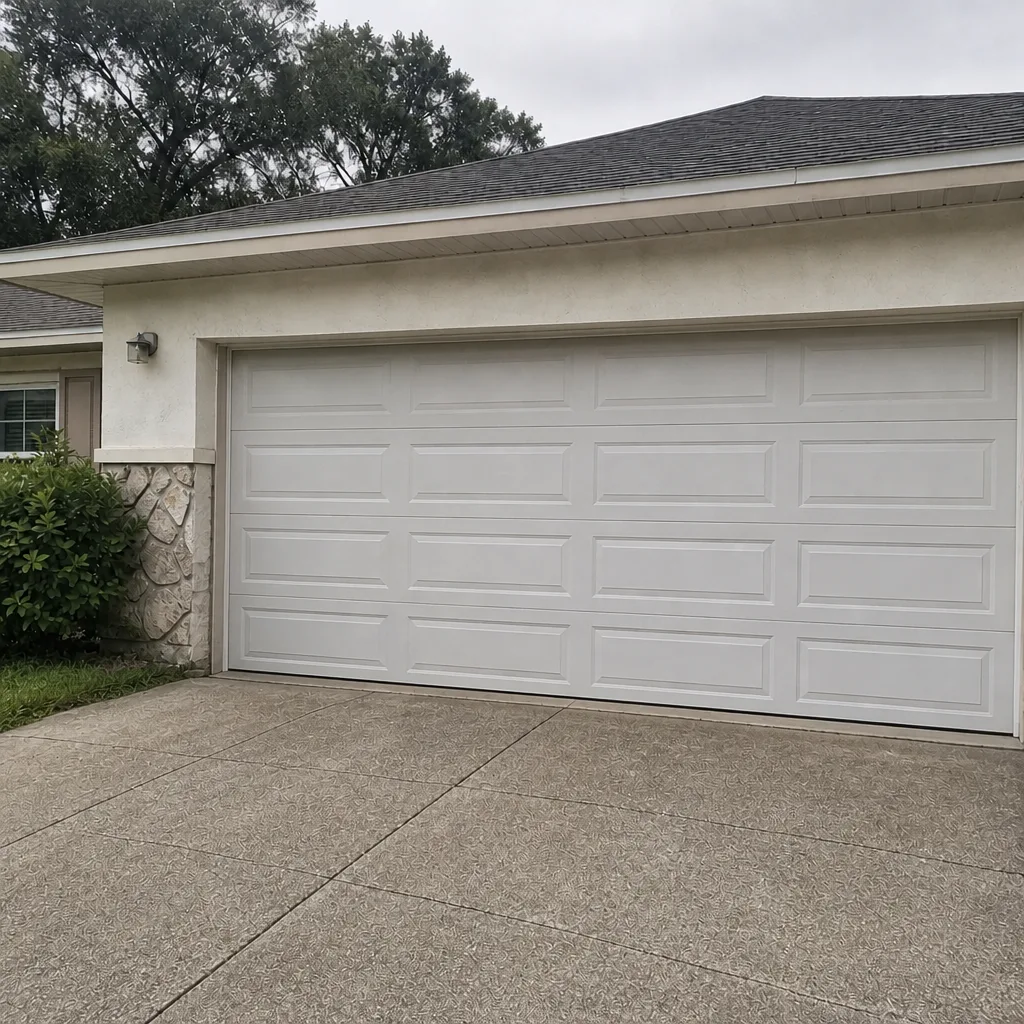 After
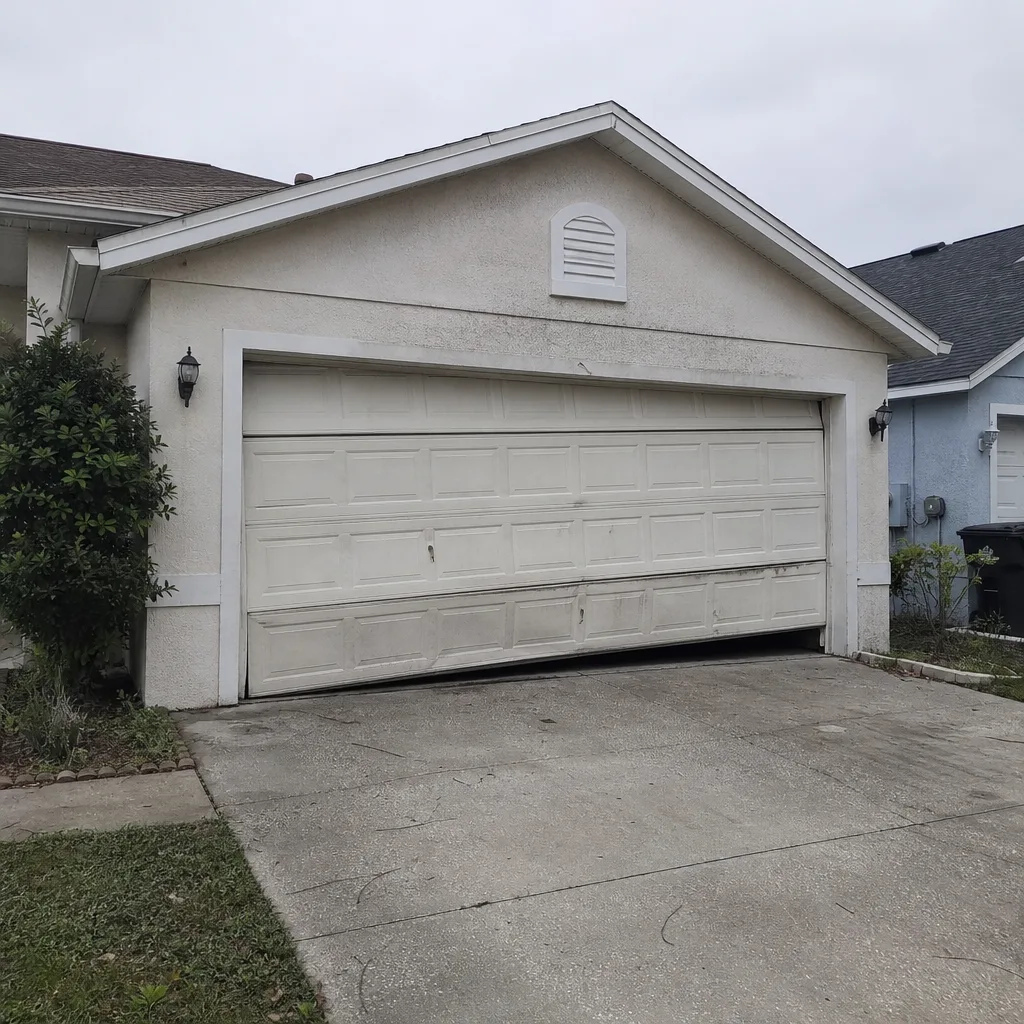 Before
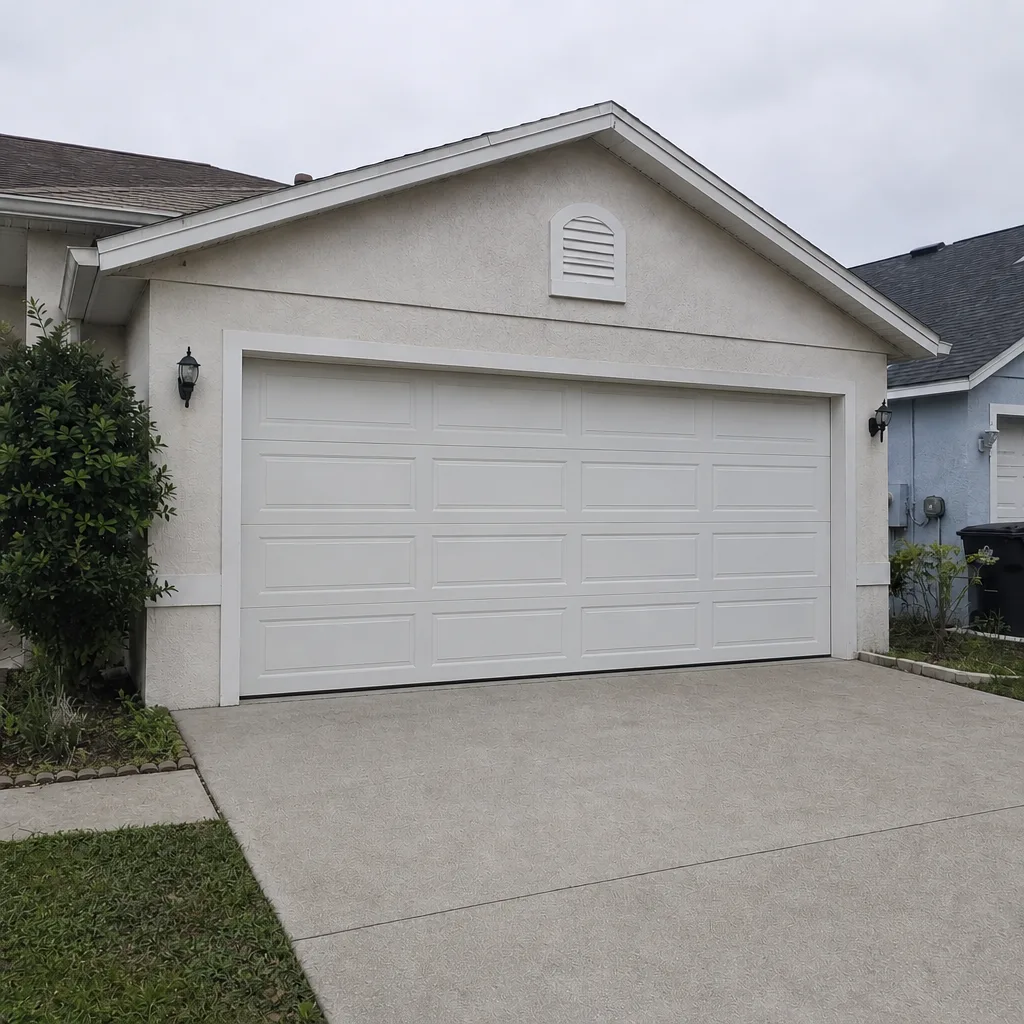 After
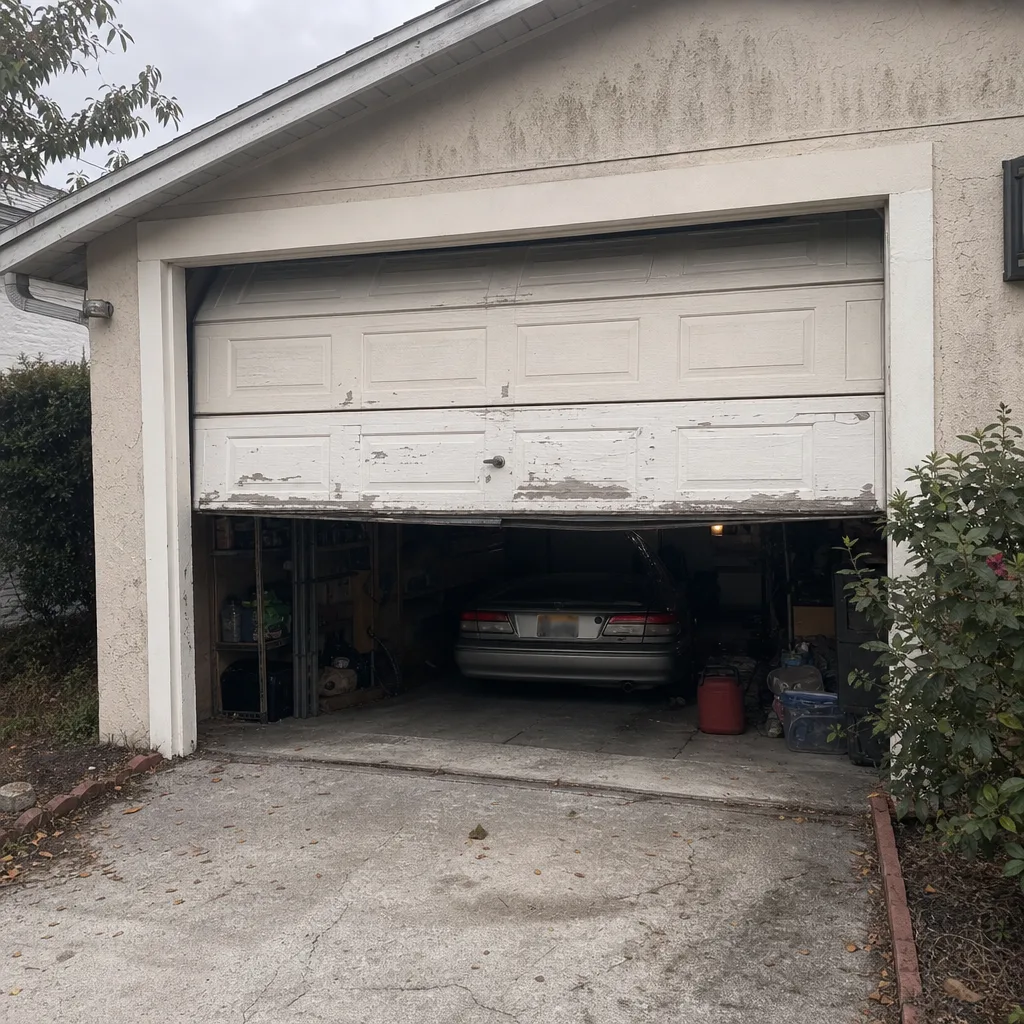 Before
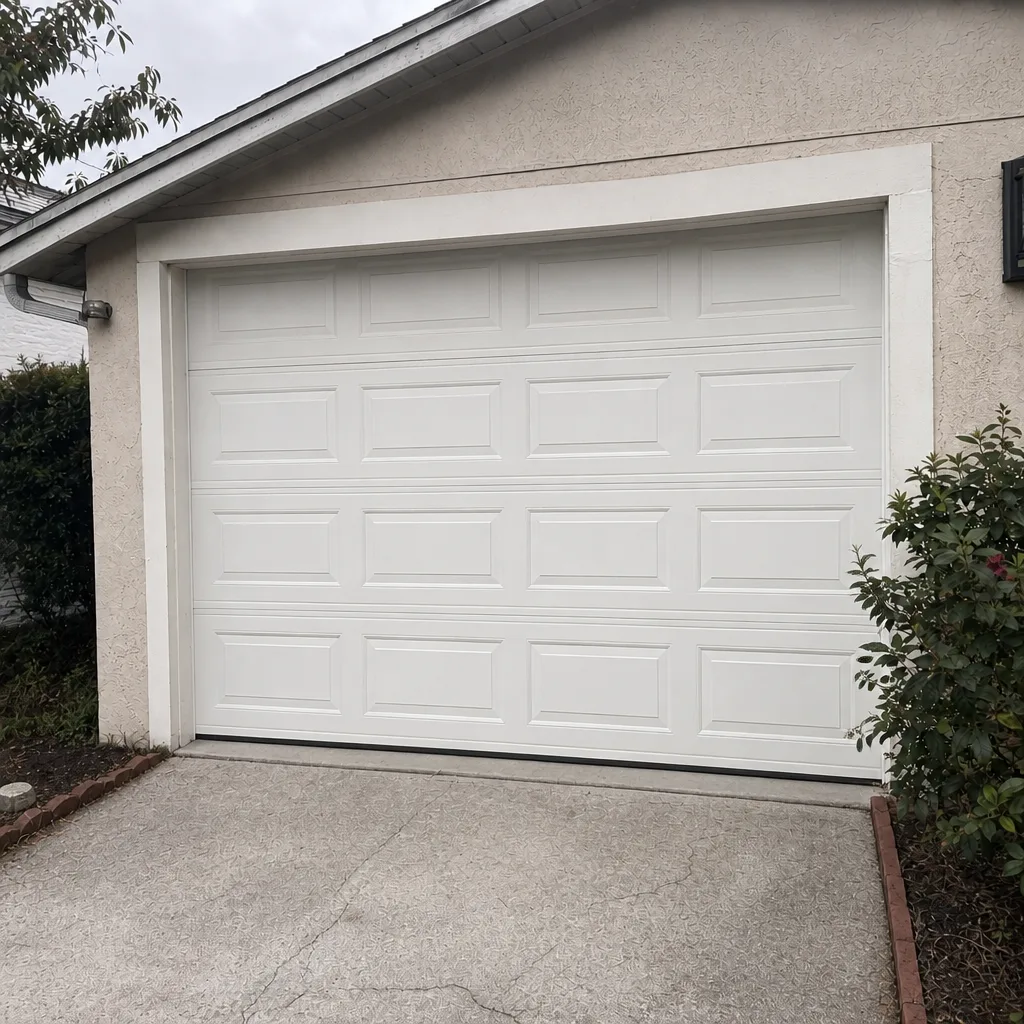 After
When to Call a Professional
Call for the scenarios on this list and don’t wait for the next season to arrive. A spring that’s lost tension, a cable that’s frayed or kinked, a door that’s hard to lift by hand, or a door that reverses on its own are all signs to stop using the opener. So is a door that’s started to sag at one corner, a track that got hit or bent, and any panel damage after a storm. On the opener side, call for a motor that runs but doesn’t move the door, a remote that no longer pairs, a safety reverse that doesn’t reverse on contact, or a photo-eye sensor that keeps reading as blocked. Riverview Garage Door Repair Pros offers free estimates in Riverview – call (866) 885-7049. One call covers repair, opener repair, springs, and full installation, so you don’t have to track down a second company for anything on the list. The written estimate is quoted before any work begins.
Frequently Asked Questions
A full inspection twice a year, once in May before hurricane season and once in the fall, with small monthly checks in between. The May inspection is the one that catches the most, because it’s the last comfortable window before storm season and it gives you time to fix anything it finds. The fall inspection is when you assess what the wet season did to your seals and hardware. In between, a quick monthly check of the seal, the safety sensors, and any odd sound keeps small issues from becoming repair calls.
Seals wear from the dry season, not the wet season. Rubber weatherstripping flexes constantly through the wet months and then dries out when the humidity drops in winter. That dry-out is what hardens the rubber and causes it to crack, so the visible damage shows up in January and February. By August the seal is at its most flexible, which is why the damage that ends up in the shop was actually done the previous winter. If your seal looks fine in August but cracked in December, that’s the pattern working as expected.
The seven-item May checklist: manual release, balance by hand, bottom seal, wind brace hardware, safety reverse, tracks and lubrication, and the opener’s battery backup. Each of those catches a specific failure that a storm turns into a bigger problem. The two most important items are the manual release and the balance test, because those tell you whether the door will open by hand if you lose power during the storm.
Usually not. Temperature swings change how much resistance the door offers, and an opener whose force setting is close to the door’s actual resistance will trip the safety reverse when the door stiffens. That’s a sensitivity setting, not a failing motor. Test the reverse on a warm afternoon and again on a cool morning. If it only reverses when cool, the fix is a calibration rather than a new opener. If it reverses at the same spot every time regardless of temperature, that’s mechanical and worth a call.
You can lubricate the torsion spring if you can reach it safely from the floor with the door closed, using a garage door lubricant. If you need a ladder, or if you’re not sure which part of the spring to touch, that’s a professional job. Don’t adjust the spring’s tension, don’t try to move the set screws, and don’t handle anything that’s under load. Springs are the most dangerous part of the door to work on, and torsion springs are under constant tension even when the door is closed.
Do the full post-storm inspection anyway, before you run the door. Look at the panel alignment from outside, check the tracks and frame, check the seal and threshold, clear any debris from the opener path, test the manual release, and test the safety reverse. A door that looks fine can have a slight bend in a track or a misaligned panel that will jam when the opener pulls it. Taking ten minutes to inspect saves a repair.
The Bottom Line
Riverview’s year isn’t four seasons, it’s three windows and a stretch of monthly checks. May is the inspection that matters most, because a pre-hurricane check catches a door’s problems before a storm turns them into emergency calls. The wet season is for watching seals, sensors, and hardware, not for heavy maintenance. The dry season is when the seal and weatherstripping damage shows up and when spring lubrication and opener calibration are worth doing. After any storm, inspect before you run the door. Springs and cables stay with a professional; everything else is a few minutes a month. If the door stops moving or a spring lets go, call (866) 885-7049 for a free estimate.
Written by the team at Riverview Garage Door Repair Pros.