Last updated November 21, 2026
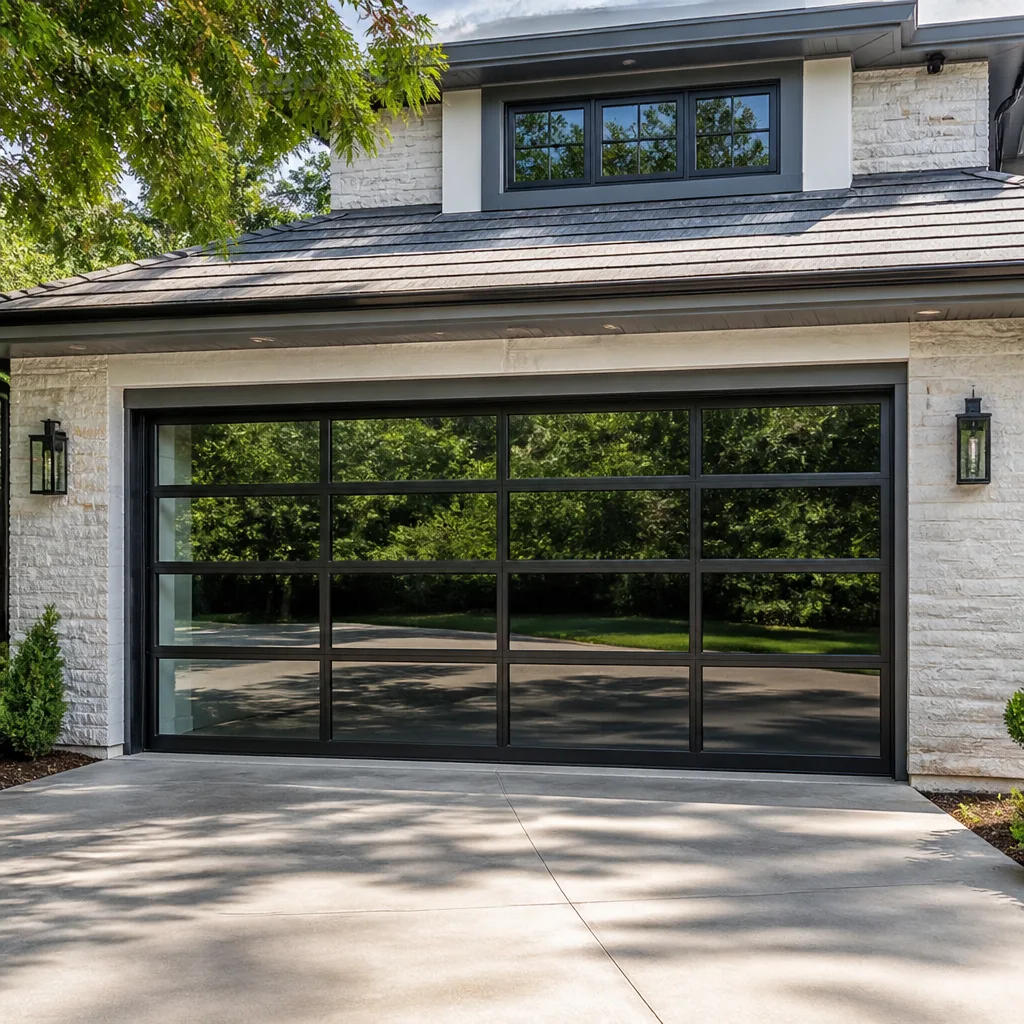 Full-view glass
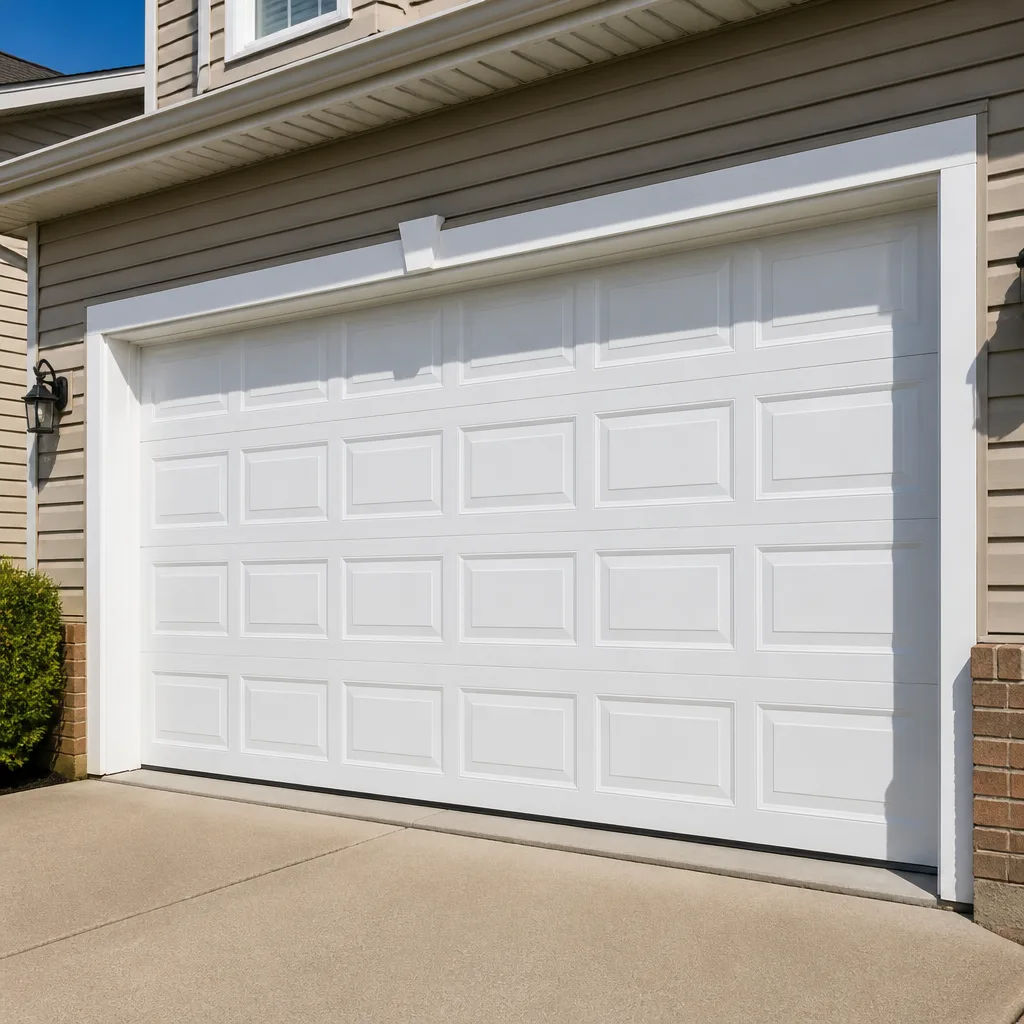 Raised-panel steel
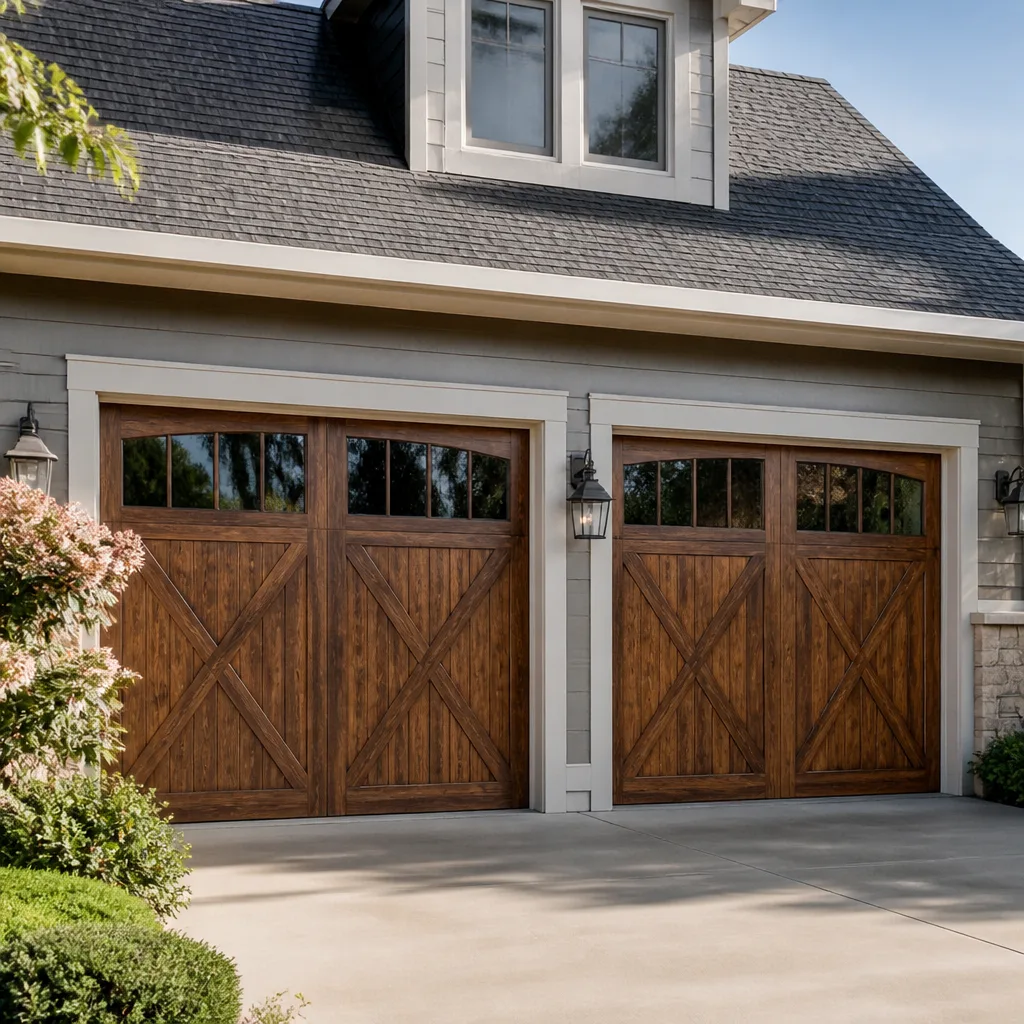 Carriage house
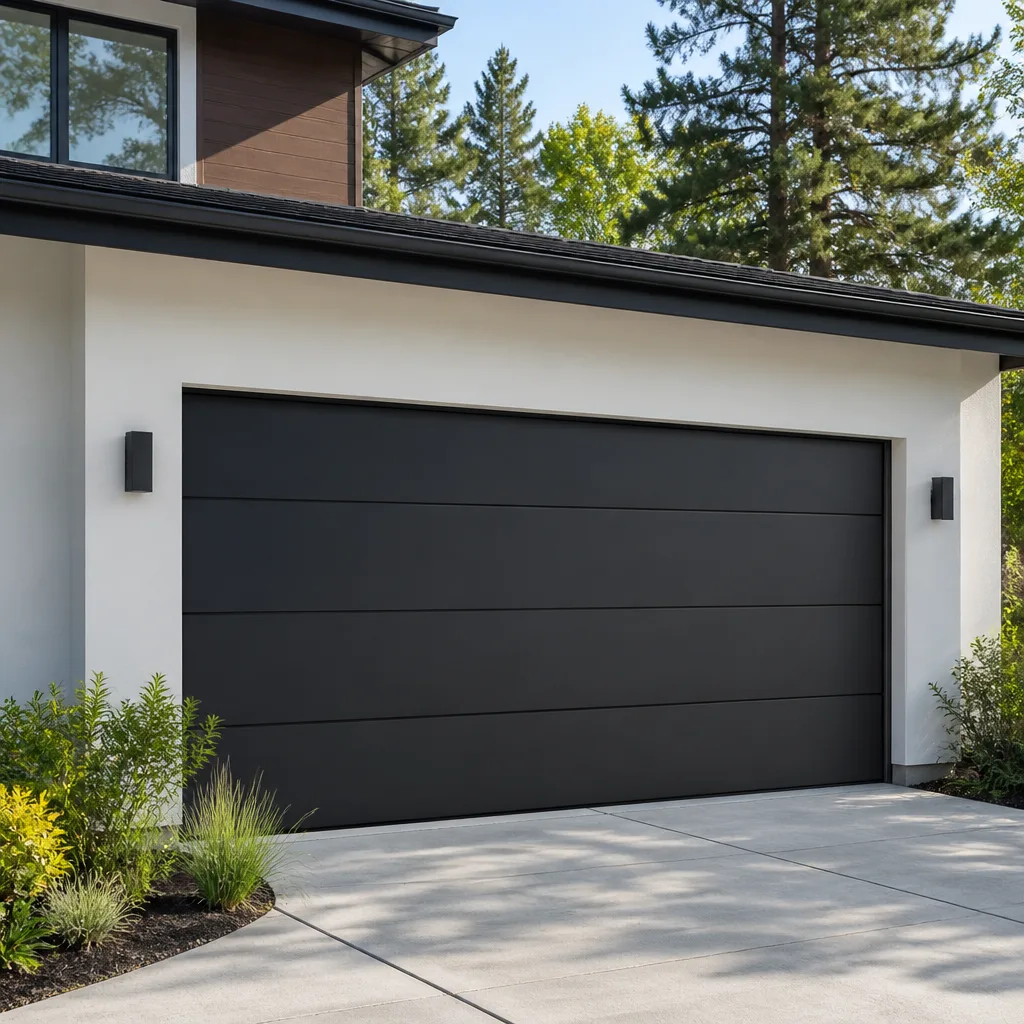 Modern flush
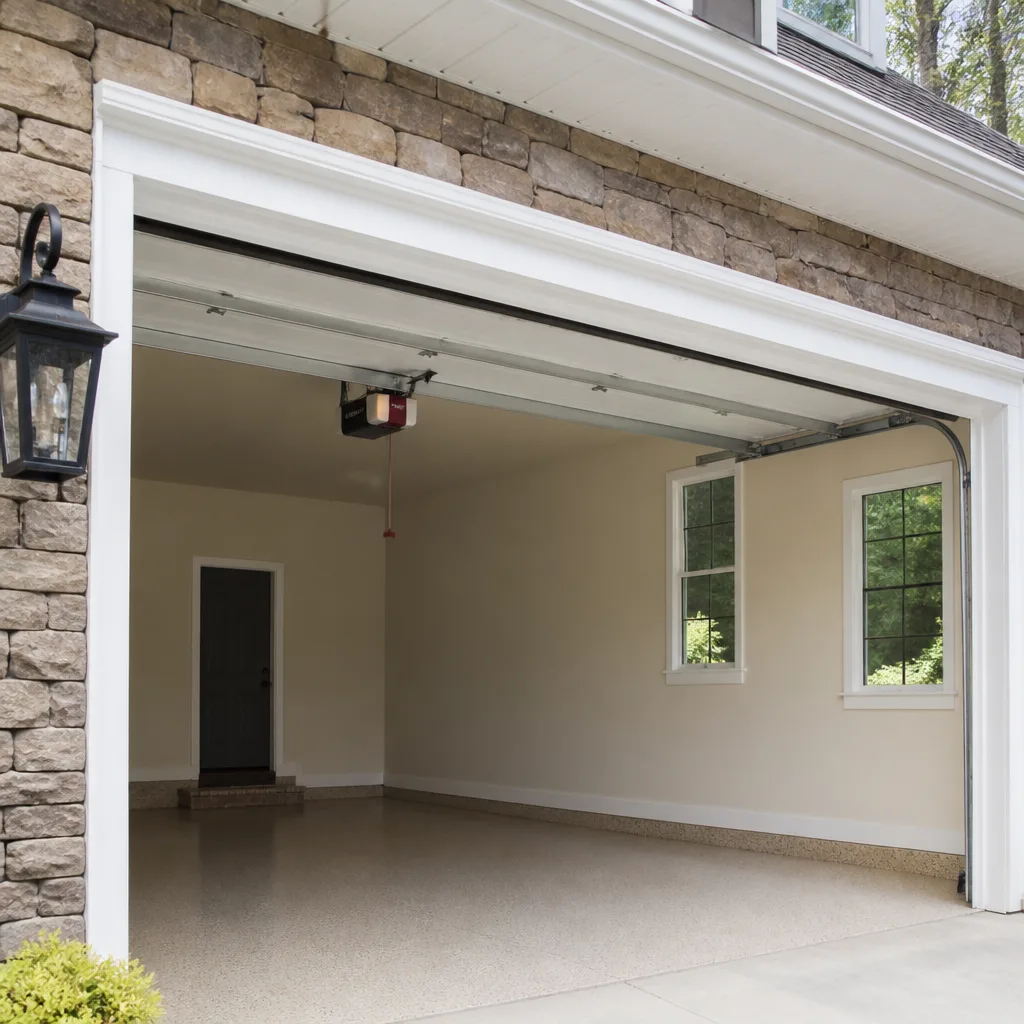 LiftMaster openers
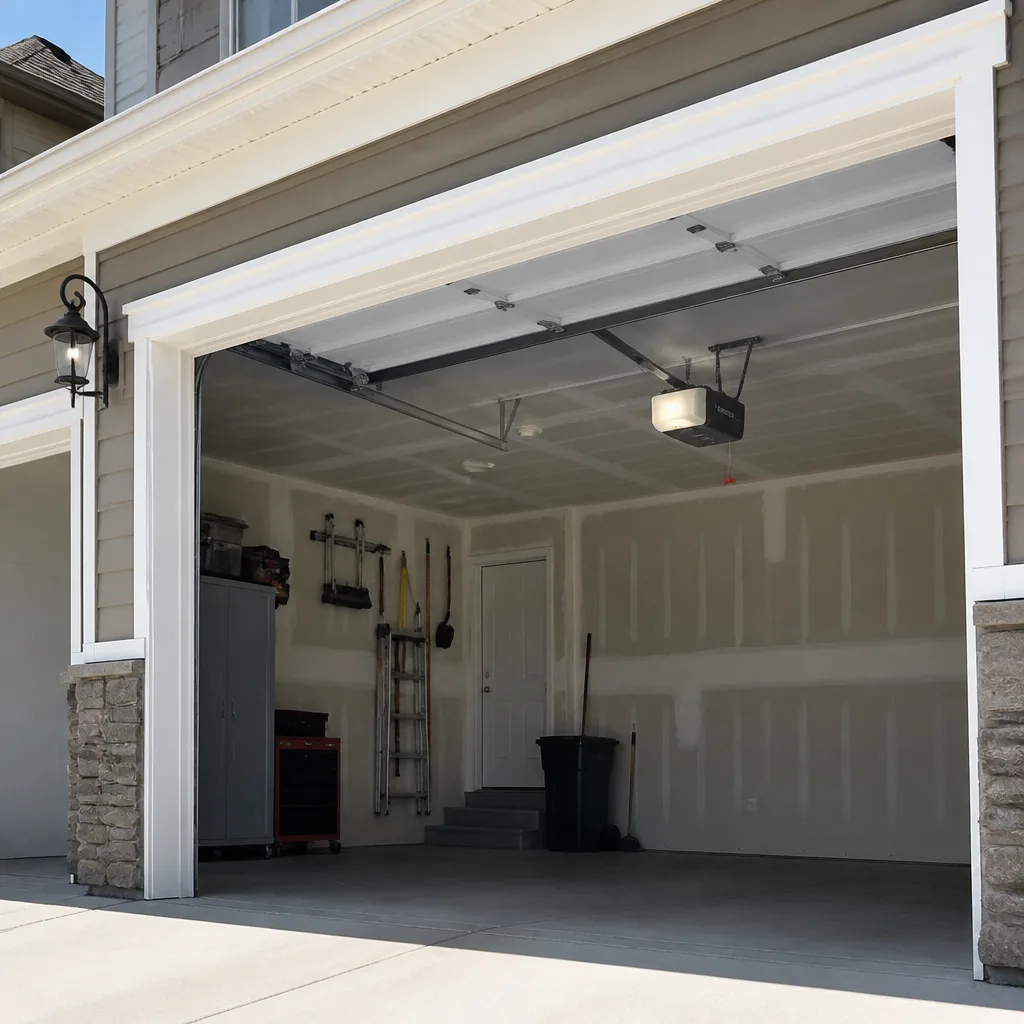 Chamberlain openers
Full 25-point door and opener safety check with every visit - springs, cables, rollers, tracks, and your LiftMaster or Chamberlain opener included
You get a price before we start. It does not change when the pro arrives.
Get your free estimateGarage Door Repair Maintenance Checklist for Riverview Homeowners
The number one cause of avoidable garage door service calls isn’t a broken part. It’s a part that gave clear warning signs for weeks while the homeowner had no idea how to read them. A door that shudders, a spring that twangs a little louder than it used to, a bottom seal that’s starting to curl – each of these is the door telling you something specific. Most people just live with it until the door stops moving entirely. This guide walks through what each check actually reveals, what a failing component looks and sounds like in Riverview’s heat and humidity, and the exact point where a quick observation should turn into a call to a specialist.
Quick Answer
A proper garage door maintenance checklist for a Riverview home covers the balance test, spring condition, cable tension and fraying, roller and hinge wear, lubricant choice, bottom seal and weatherstripping, and the opener’s force and safety-reverse settings. Check monthly for smooth movement and unusual noise, quarterly for lubrication and seal condition, and annually for a full hardware inspection by a technician. Anything involving springs, cables or the opener’s internal wiring is professional work, not a homeowner task.
Styles & brands we work with
- Raised-panel steel
- Carriage house
- Modern flush
- Full-view glass
- LiftMaster openers
- Chamberlain openers
Table of Contents
- Why Riverview Doors Age Differently
- The Balance Test: Your First and Best Diagnostic
- Spring Wear: Torsion vs. Extension in Florida Homes
- Reading Cable Tension Before It Fails
- Lubrication: Why WD-40 Is the Wrong Call
- Bottom Seals, Weatherstripping, and the Rainy Season
- Opener Checks Most Homeowners Skip
- Your Realistic Maintenance Schedule
Why Riverview Doors Age Differently
Garage doors in Riverview don’t wear the way the manufacturer’s manual assumes. That manual was written for a climate with moderate humidity and a defined cold season. Riverview delivers the opposite: long stretches of heat, humidity that stays high for months, and a rainy season that drives moisture against every seal and joint on the door. The result is that components age on a different curve here, and a maintenance routine built around a generic checklist misses what actually matters.
Springs are the clearest example. A torsion spring that cycles cleanly in dry air will still fatigue in Riverview’s humidity, but the way it fails is often quieter. Instead of a dramatic break, you get a slow loss of counterbalance that shows up as a door that feels heavier by hand or doesn’t hold its position when you stop it halfway. That slow fade is easy to ignore until the opener starts straining to lift a door it used to handle without effort.
Wood and steel door panels behave differently too. Moisture works at the bottom edges, at seams, and at the points where hardware is bolted through the skin. A panel that looks fine from the driveway can have a soft bottom rail or rust creeping around the hinges from the inside. Some of the panels we see most often in this part of Hillsborough County come from Clopay and Amarr, and both are well-built doors – the wear pattern is about the climate, not the brand.
What this means for a Riverview homeowner is simple: check the things that fail quietly. Balance, seal contact, and hardware tightness tell you far more about the health of your door in this climate than a visual inspection from the curb. The rest of this checklist is built around that idea.
The Balance Test: Your First and Best Diagnostic
The balance test is the single most useful thing a homeowner can do, and it needs no tools. It tells you whether the springs are still carrying the door’s weight or whether the opener has quietly taken over a job it was never designed to do. A door that passes this test is likely in decent mechanical shape. A door that fails it is giving you advance notice of spring wear.
How to do a balance test
- Close the door and disconnect the opener using the manual release cord (usually a red handle). This takes the opener motor out of the equation.
- Raise the door by hand to about waist height. It should move with steady resistance, not a sudden drop or a fight.
- Stop the door at the halfway point and let go. A balanced door holds roughly where you left it.
- If the door sinks on its own, the springs are losing tension and the opener has been compensating.
- If the door shoots up or is very hard to pull down, the springs are over-tensioned and need professional adjustment.
What an out-of-balance door tells you is that the spring system is no longer matched to the door’s weight. In Riverview’s climate, that usually means the springs are showing fatigue well before they break. It’s the difference between scheduling a spring replacement on your terms and dealing with a door that won’t open on a morning you need to leave. If the test fails, that’s your cue to look at garage door spring repair rather than waiting for the break.
One note: never adjust springs yourself to “fix” a balance issue. The tension on these springs is enormous and the winding process is genuinely dangerous. That’s a job for a trained technician with the right winding bars and a clear understanding of the door’s weight rating.
Spring Wear: Torsion vs. Extension in Florida Homes
Most Riverview homes have one of two spring systems. Torsion springs mount on a horizontal shaft above the door and twist to counterbalance the weight. Extension springs run along the horizontal tracks on each side and stretch instead of twist. Which one you have changes what wear looks like and what a failure sounds like, so it’s worth knowing.
Torsion springs
- You’ll see them as a coiled spring on a bar above the door opening.
- Wear shows as a door that gets progressively heavier and a gap in the coil when the spring breaks.
- They tend to fail with a sharp bang, but the warning signs build for weeks beforehand through the balance test.
- Torsion springs on most Florida tract homes are rated for a set number of cycles, and cycle count is what eventually retires them.
Extension springs
- They run parallel to the door tracks on each side, usually with a safety cable threaded through the center.
- Wear shows as stretched coils, a door that hangs unevenly, or a visible gap where the spring has relaxed.
- When they fail, they snap back toward the door with real force, which is why the safety cable matters.
- Rust at the hook ends is a common failure point in humid climates.
In our experience, the most useful thing a homeowner can do is identify which system they have and watch for the specific warning signs. On a torsion system, that’s the balance test. On an extension system, it’s a visual scan of the springs for stretching, gaps, or rust at the ends. Both are observations, not repairs. Spring work is the most dangerous part of the trade, and it’s not a DIY project, which is why it’s a standalone specialty for us – springs handled safely means a technician with the right tools and training.
Reading Cable Tension Before It Fails
Cables are the part homeowners most often misread. A properly tensioned cable looks taut and straight, running cleanly from the bottom bracket up to the drum at the top of the door. It should have no slack and no fraying, and it should sit evenly in the drum groove. A cable that’s days away from snapping usually looks different, and those differences are visible to anyone who knows what to look for.
What “normal” looks like
- The cable runs straight with no visible sag when the door is closed.
- The strands are tight and uniform, with no broken wires poking out.
- The cable sits fully seated in the drum at the top and the bottom bracket is secure.
- Both sides look roughly the same. Asymmetry between left and right is a warning sign.
What a failing cable looks like
- Broken strands – little wire ends sticking out like a frayed rope, often near the drum.
- A cable that’s jumping out of the drum groove or riding on top of itself.
- Visible slack on one side while the other side is tight.
- Rust pitting along the length, more common in Riverview’s humid air than in drier climates.
A frayed cable is not a “watch it for a while” situation. It’s under load every time the door moves, and a snapped cable can send the door crashing down or whip the loose end across the garage. If you see broken strands or a cable out of its groove, stop using the door and get a professional out to look at it. That’s the kind of call we’d rather take before a failure than after.
Lubrication: Why WD-40 Is the Wrong Call
The most common homeowner mistake we see isn’t skipping lubrication. It’s using the wrong product. WD-40 is a penetrating oil and water displacer, not a lubricant, and it’s the wrong choice for garage door hardware. It goes on thin, evaporates or migrates away, and leaves the moving parts drier than they were. In a Riverview garage where humidity sits high for months, the result is accelerated wear and more noise, not less.
What actually holds up in Florida heat and humidity
- A white lithium grease or a dedicated garage door lubricant for the rollers, hinges, and spring coils.
- A silicone-based lubricant for the weatherstripping and the tracks – silicone won’t attract dust the way grease does.
- Nothing on the tracks themselves beyond a wipe-down with a damp cloth. Grease on the tracks collects grit and turns the track into a grinding surface.
The right routine is simple. Wipe the tracks clean, apply a light coat of lithium grease to the hinges, rollers, and spring coils, and keep the weatherstripping supple with a silicone spray. Do it twice a year – once before the rainy season and once after. That’s the realistic frequency for a Riverview garage, and it costs less than a single service call.
What lubricant does not fix is a mechanical problem. If the door is noisy after a proper lubrication, the noise is coming from a worn roller, a loose hinge, or a failing bearing, and grease just masks it for a while. When that’s the case, a technician can identify the specific part, and you can book garage door repair to replace what’s actually worn.
Bottom Seals, Weatherstripping, and the Rainy Season
Riverview’s rainy season is the hardest test a garage door seal will face all year. Water that gets past the bottom seal doesn’t just pool on the floor. It works its way into the bottom rail of the door panel, where it can rust steel or soften wood from the inside out. By the time you see the damage from the outside, the panel is often already compromised.
Checking the seal takes no tools. Close the door and look along the bottom edge from inside the garage. A good seal should touch the floor evenly across the full width, with no gaps and no spots where it’s flattened out. Run your hand along the bottom edge – if you feel air moving through, water will follow. Look at the weatherstripping around the door’s sides and top for cracks, compression, or a hard, brittle feel. Supple stripping seals; dried-out stripping lets water in.
What to look for on a rainy-season inspection
- Gaps between the bottom seal and the floor, especially at the corners.
- Water stains or rust lines on the inside of the bottom panel.
- Cracked or hardened weatherstripping at the sides and top.
- Daylight visible around the closed door – a clear sign the seal has failed.
- Soft spots in a wood panel’s bottom rail.
If the seal is failing, replacing the bottom seal or the weatherstripping is inexpensive and worth doing before the rains come. If the panel itself has absorbed water and is soft or rusted, that’s a bigger conversation and may point toward panel replacement or a new door. Either way, this is the check that protects the rest of the door, and it’s one of the highest-value items on the whole list for a Riverview home.
Opener Checks Most Homeowners Skip
The opener is the part of the system that gets blamed for problems that actually start elsewhere, and it’s also the part with safety settings most homeowners never check. Two things matter here: the safety-reverse test and the force setting. Both take a minute and both matter for the people and pets in your household.
The safety-reverse test
- Place a roll of paper towels or a small box flat on the floor in the path of the closing door.
- Close the door and watch. The door should reverse and go back up within a couple of inches of contacting the object.
- If it presses down instead of reversing, the safety setting needs attention before the door is used again.
The force setting is the other half. A door that struggles to close and then slams the last few inches, or reverses for no reason, usually has a force setting that’s out of adjustment or a mechanical problem that’s confusing the opener’s sensing. On modern LiftMaster and Chamberlain openers, those settings live in the head unit or the app, and adjusting them to compensate for a mechanical problem is the wrong fix. It masks the issue until the opener fails.
Older openers from Craftsman and Genie are still common in Riverview homes and are workhorses, but their safety settings are easy to leave unchecked. If your opener is older and the safety test doesn’t pass, or if the door reverses for no reason, that’s a job for a technician. We handle garage door opener repair across all the major brands, and a quick visit usually sorts out whether it’s a setting, a sensor, or a mechanical problem the opener has been trying to tell you about.
Your Realistic Maintenance Schedule
A maintenance checklist is only useful if you’ll actually do it. Most generic checklists are so long that homeowners do the first few items once and never come back. This schedule is built around what matters and what a homeowner can realistically handle. Some of it needs no tools at all, and some of it should be left to a technician.
Monthly (no tools, 5 minutes)
- Watch the door through a full open and close cycle. Listen for new noises – grinding, squealing, popping.
- Do the balance test if the door feels heavier than usual or the opener seems to strain.
- Check the safety-reverse test with a small object in the door’s path.
- Scan the cables for fraying or a cable out of its drum groove.
Quarterly (no tools, 15 minutes)
- Check the bottom seal and weatherstripping for gaps, cracks, or hardening.
- Wipe the tracks clean with a damp cloth and check that the rollers are sitting properly.
- Look at the hinges and bolts for loose hardware – tighten by hand only.
- Check that the photo-eye sensors on the opener are aligned and the lens isn’t fogged.
Annually (technician)
- A full hardware inspection: springs, cables, drums, rollers, hinges, and bearings.
- Spring tension and balance checked by a professional.
- Opener force and travel settings verified and adjusted.
- Panel and bottom-rail condition, especially the inside of the door where moisture damage shows first.
The honest split is this: the monthly and quarterly items are observations you can do without touching anything under tension. The annual items involve the parts that fail dangerously, and those are best left to a trained technician. In our experience, a door that gets its annual inspection rarely fails without warning.
Common Mistakes to Avoid
- Lubricating with WD-40. It’s a water displacer, not a lubricant, and it leaves the moving parts drier than before. Use a lithium grease or a dedicated garage door lubricant instead.
- Greasing the tracks. Grease on the tracks collects grit and turns the track into a grinding surface. Wipe them clean and leave them dry.
- Adjusting spring tension yourself. Springs are under enormous load and the winding process is dangerous even for experienced trade workers. This is not a homeowner task.
- Ignoring the balance test. A door that sinks when you let it go is telling you the springs are fatigued. Waiting for the break means dealing with a door that won’t open at the worst possible time.
- Running the opener to compensate for a heavy door. The opener is designed to lift a balanced door, not to do the springs’ job. It will fail faster, and the failure is more expensive.
- Skipping the rainy-season seal check. In Riverview, a failing bottom seal lets water into the bottom rail, and that damage often shows up as a soft or rusted panel long after the seal has given up.
- Assuming a new opener will fix a mechanical problem. A new opener on a door with worn springs, cables, or rollers inherits the same problem and wears out sooner. Fix the mechanics first.
See the difference
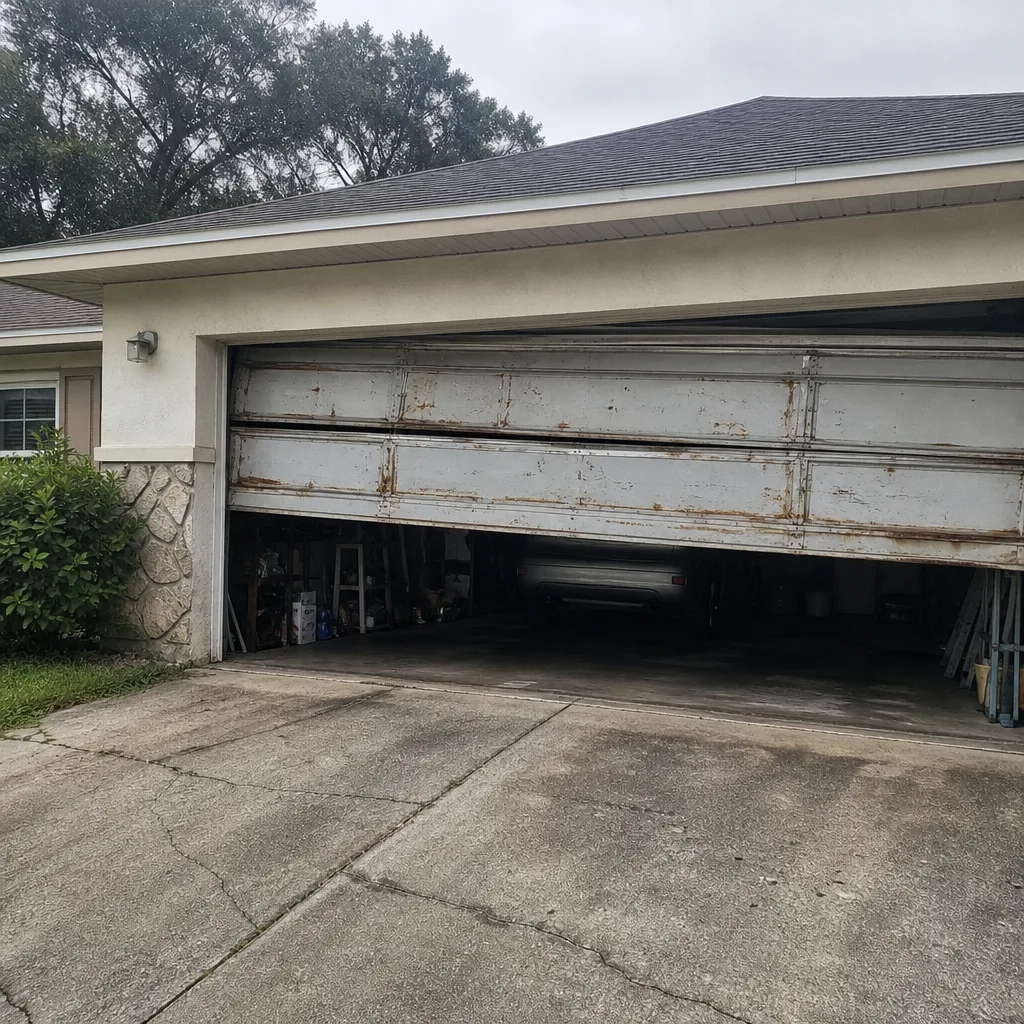 Before
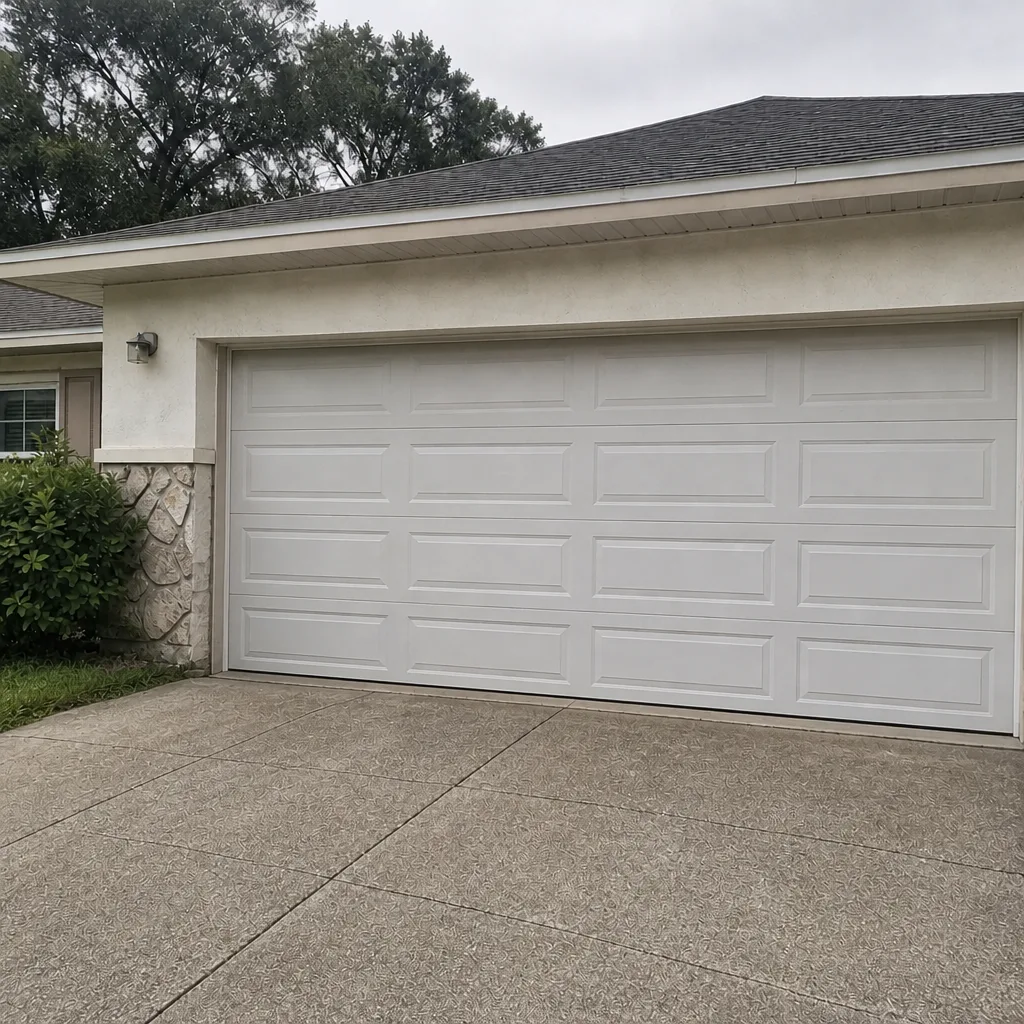 After
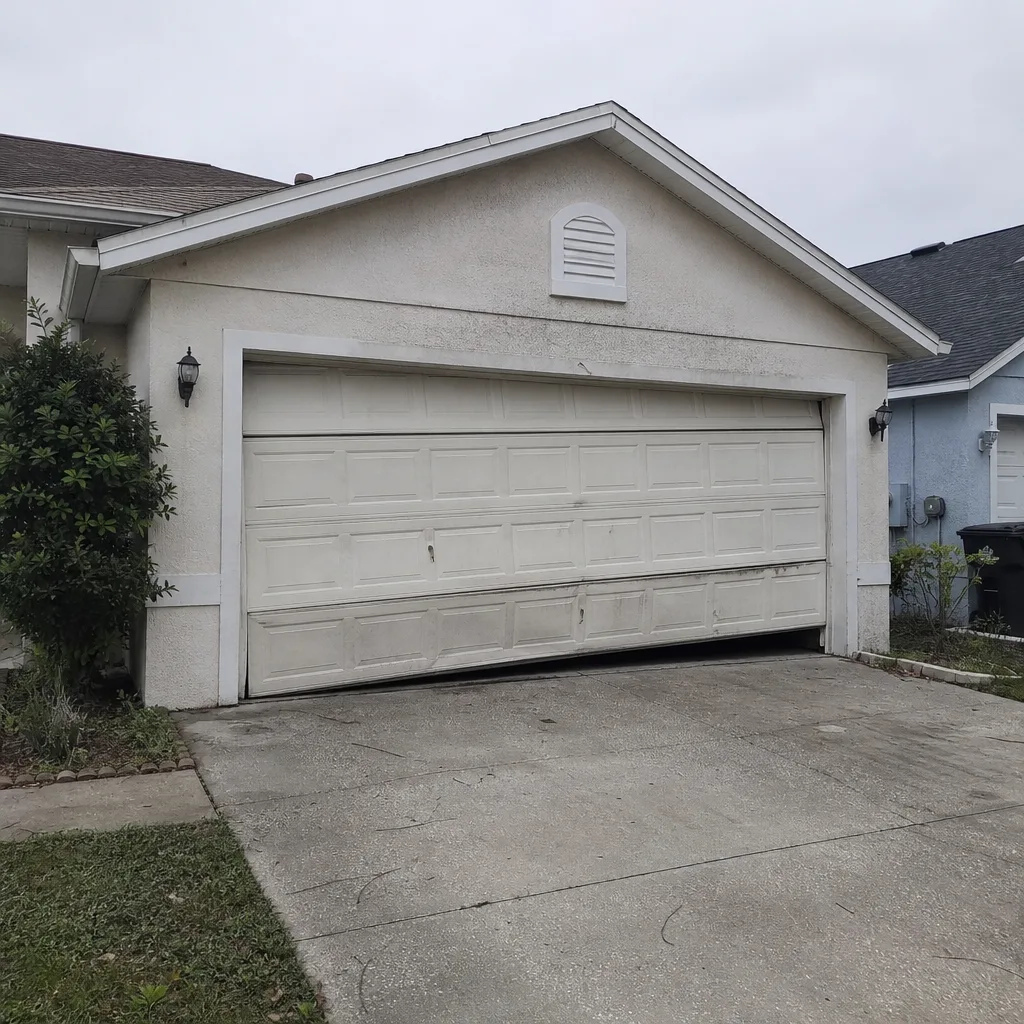 Before
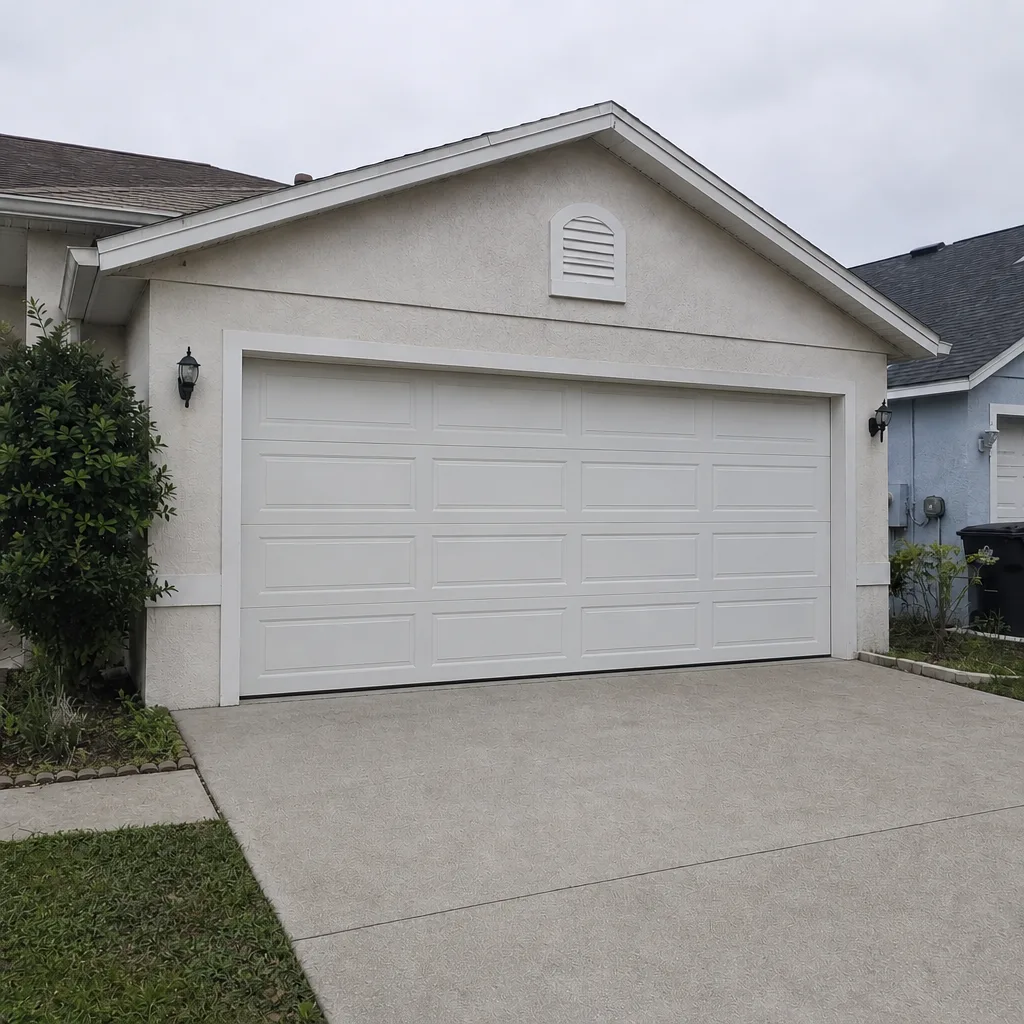 After
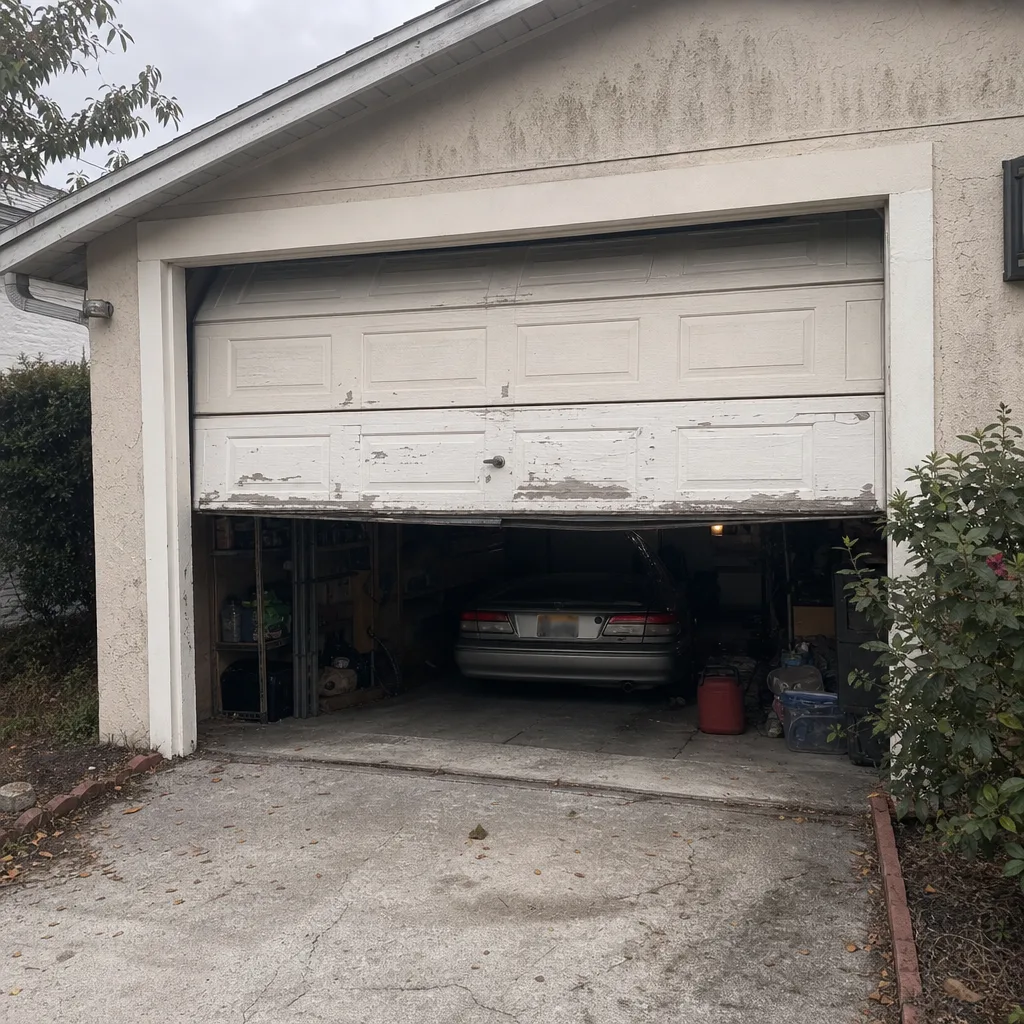 Before
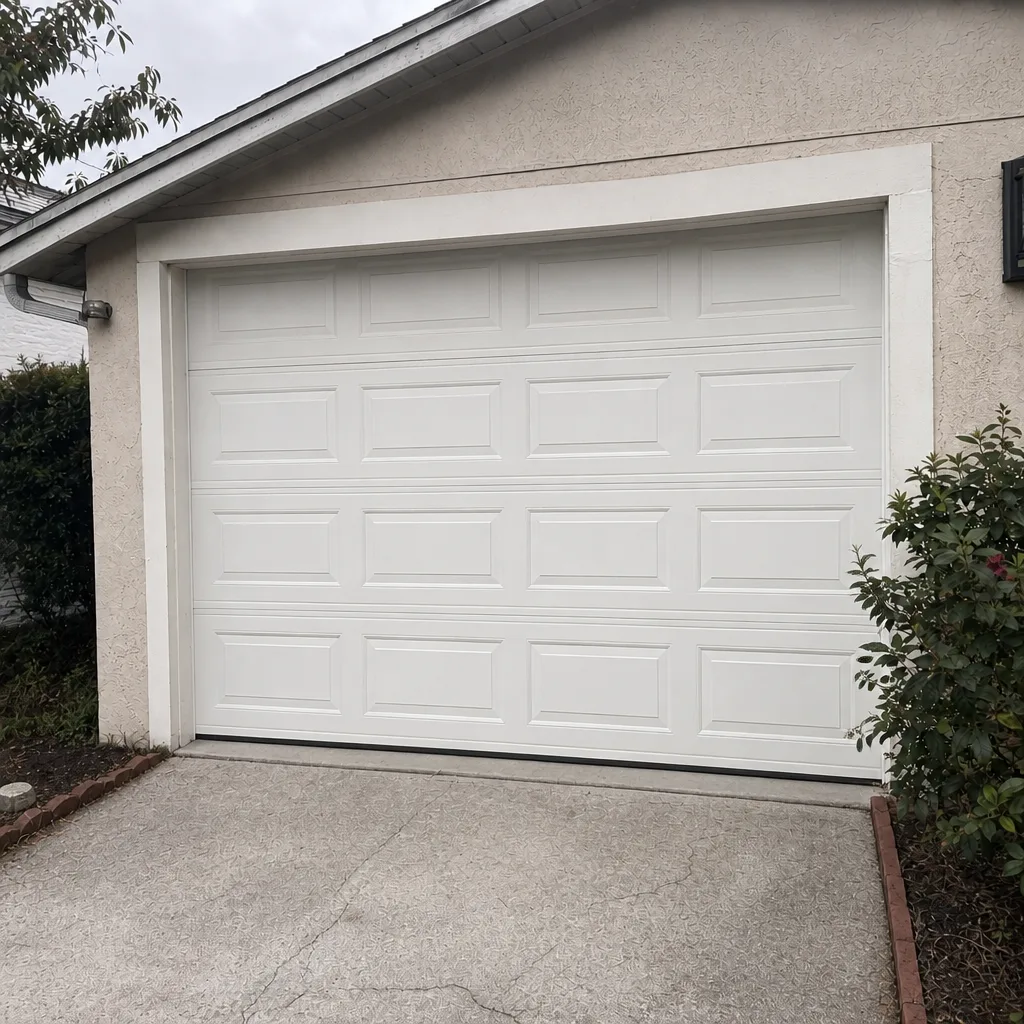 After
When to Call a Professional
Some problems are worth a call before you do anything else. A broken spring, a snapped or frayed cable, a door that’s come out of its track, a door that reverses for no apparent reason, and a door that won’t open at all are all cases where a trained technician should look at the system before anyone uses the door. Spring and cable work is dangerous, and a door that’s off its tracks can fall.
Some situations need a same-day response. If your door is stuck open with the house exposed, if a car is trapped inside, or if the door has come off the tracks entirely, that’s an emergency call. Riverview Garage Door Repair Pros offers free estimates in Riverview and can be reached at (866) 885-7049. Our technicians have up to 14 years of experience, and we work on the brands you already own – Amarr and Wayne Dalton among them – so a repair doesn’t turn into a replacement by default.
For scheduled maintenance and inspection, a call is still the right move, especially if the annual items on the checklist haven’t been done in a while. The estimate is free, the price is quoted and agreed before any work starts, and the written quote is the price.
Frequently Asked Questions
An annual full inspection by a technician is the right baseline, with homeowner checks monthly and quarterly. Riverview’s heat and humidity speed up wear on springs, seals, and cables, so the annual visit matters more here than in a drier climate. Call (866) 885-7049 for a free estimate on a full inspection.
Yes, the balance test is safe and needs no tools, as long as the door is disconnected from the opener and you don’t touch the springs or cables. You’re just raising the door by hand and seeing whether it holds. If it sinks or shoots up, stop and call a technician – that’s a spring issue, not a DIY fix. Estimates are free, so there’s no reason to guess.
A single loud bang is often a spring breaking, and a door that won’t lift after that bang confirms it. If the noise is a repeated grinding or popping, it’s more likely worn rollers, loose hinges, or a bearing. Either way, stop using the door until a technician looks at it. Call (866) 885-7049 for a same-day response on a spring or safety failure.
A white lithium grease or a dedicated garage door lubricant on the hinges, rollers, and spring coils holds up well in Florida humidity. A silicone spray is the right choice for weatherstripping. Skip WD-40 – it displaces water but doesn’t lubricate, and the parts end up drier than they started.
If you can see daylight around the closed door, feel air moving along the bottom edge, or spot water stains or rust on the inside of the bottom panel, the seal needs replacing. In Riverview, this check is worth doing before the rainy season rather than after. Call (866) 885-7049 and we’ll take a look.
Most repairs are worth it when the panels are still solid and the frame is sound. Springs, cables, rollers, and openers are all replaceable parts, and a repair on a good door is usually the smarter call. If the panels are rusted through, water-damaged from inside, or out of production, replacement makes more sense. A free estimate in Riverview will tell you which side of that line your door is on.
The Bottom Line
Garage door maintenance is less about doing more and more about knowing what to look at. The balance test, cable condition, seal contact, and the safety-reverse check catch most problems while they’re still cheap to fix. In Riverview’s heat and humidity, springs and seals wear on a schedule all their own, and the homeowner who checks monthly and books an annual inspection is the one who never gets surprised by a door that won’t open.
When a check turns up something you shouldn’t handle – springs, cables, or the opener’s settings – that’s the moment to call. Riverview Garage Door Repair Pros offers free estimates and a same-day response on urgent failures. Call (866) 885-7049 when your garage door won’t move, and we’ll take it from there. One call covers repair, opener work, springs, or a new door, with no referrals needed.
Written by the team at Riverview Garage Door Repair Pros.